
Evaluating AI procurement automation platforms.What actually matters.
How AI platforms differ from traditional procurement software, what capabilities matter, and how to implement them for measurable ROI.
Course Overview
What you will learn.
AI procurement automation refers to platforms that use machine learning, natural language processing, and agentic AI to automate sourcing, supplier evaluation, RFX management, and contract analysis. Unlike traditional procurement software that automates workflows, AI procurement platforms can generate documents, analyze supplier responses, normalize pricing, and flag compliance risks - reducing manual effort by 40-70% while improving decision quality and speed. This course focuses on evaluating and implementing these platforms - what separates real capability from vendor claims, and how to measure ROI once you're live.
AI vs. Traditional Procurement Automation
New to the concept? Start with AI in Procurement for the fundamentals before diving into platform evaluation here →
Traditional procurement software automates workflows - routing approvals, enforcing policies, tracking spend. AI procurement platforms go further: they can read, write, analyze, and learn. The difference matters for understanding where each type adds value.
Traditional Automation
- Rules-based workflow routing
- Template-fill document generation
- Structured data processing only
- Manual content creation required
- Fixed scoring and evaluation models
- Human-in-the-loop for all decisions
AI Procurement Automation
- Intelligent document generation and analysis
- Natural language Q&A and supplier response parsing
- Unstructured data processing (PDFs, emails, contracts)
- AI-assisted scoring with reasoning explanations
- Continuous learning from historical decisions
- Proactive risk detection and compliance flagging
40-70%
Time Saved
On sourcing cycles
3-5x
Faster RFX
Document generation
25-35%
Better Prices
Through AI analytics
60%+
Risk Reduction
Contract issues caught
Core AI Capabilities in Procurement Platforms
AI procurement platforms combine several AI capabilities. Understanding what each does helps you evaluate which platforms actually deliver value vs. which ones are just adding "AI" branding to existing features.
Generative AI for Documents
Generate RFP/RFQ/RFI documents, evaluation criteria, and supplier questionnaires from minimal inputs. High-quality AI drafts from context rather than just filling templates.
Impact: 3-5x faster sourcing document creation
Natural Language Processing
Parse and analyze supplier proposals in natural language. Extract key terms, commitments, pricing, and risks from unstructured supplier responses - no manual data entry.
Impact: 80% reduction in proposal analysis time
Price Normalization and Analytics
Automatically normalize pricing across different supplier response formats - unit prices, bundles, tiered pricing, and alternative configurations - into comparable formats.
Impact: Reveals true cost differences hidden in pricing structures
Risk and Compliance Detection
Scan contracts and supplier responses for non-standard clauses, missing terms, and compliance risks. Flag potential issues before they reach legal review.
Impact: 60%+ reduction in legal review cycles
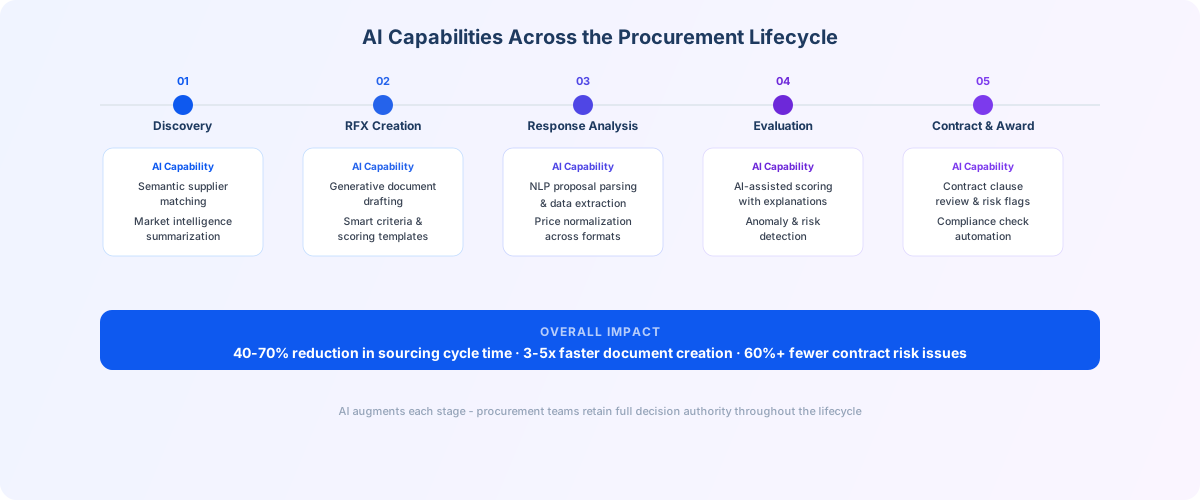
Figure 1: Where AI capabilities apply across the procurement lifecycle - from discovery to contract execution.
High-Value Use Cases for AI Procurement Automation
AI delivers uneven value across procurement processes. Some tasks benefit dramatically; others see minimal improvement. Focus your AI automation investment on high-value use cases.
RFX Document Generation and Management
Highest ROIAI can generate first-draft RFPs, RFQs, and RFIs with relevant evaluation criteria, compliance clauses, and supplier questionnaires. What takes procurement teams days can be completed in minutes.
Supplier Response Analysis
High ROIAI reads and extracts data from supplier proposals automatically - pricing, technical specifications, delivery terms, and exceptions. Evaluators work from structured summaries rather than reading raw proposals.
Supplier Discovery and Qualification
High ROIAI matches sourcing needs to supplier capabilities using semantic search. Goes beyond keyword matching to understand context - matching corrosion-resistant fasteners for marine applications to relevant suppliers even when they don't use those exact terms.
Contract Analysis and Risk Flagging
Medium ROIAI reviews contracts against policy templates and legal standards, flagging non-standard clauses, missing terms, and unusual conditions. Reduces legal review time but still requires human judgment for complex situations.
Evaluating AI Procurement Platforms
The AI procurement software market is crowded and noisy. Many vendors claim AI capabilities that amount to basic automation with a language model bolted on. Here's how to evaluate platforms rigorously.
Evaluate AI output quality
Ask: Ask vendors to generate a real RFP live during the demo.
Evaluate whether the output is actually usable or requires significant rework. AI that produces 80% usable first drafts is valuable; AI that requires rewriting from scratch isn't.
Test with your actual data
Ask: Bring a real supplier proposal to the demo and ask them to analyze it.
Can it extract the right data from your actual document formats? Many platforms work well on clean demos but struggle with real-world document variability.
Assess integration depth
Ask: Ask for a live demo of their ERP connector for your specific system.
True AI procurement value comes from connecting sourcing to ERP, contract management, and supplier data systems - not just a list of supported platforms.
Evaluate transparency and explainability
Ask: Ask the AI to explain why it flagged a specific risk or ranked a supplier.
AI scoring and recommendations should be explainable. Black-box recommendations won't get stakeholder buy-in.
Check data security and compliance
Ask: Ask directly: does our data train your models?
Procurement data is sensitive. Evaluate data handling practices, storage location, model training policies, and certifications (SOC 2, ISO 27001).
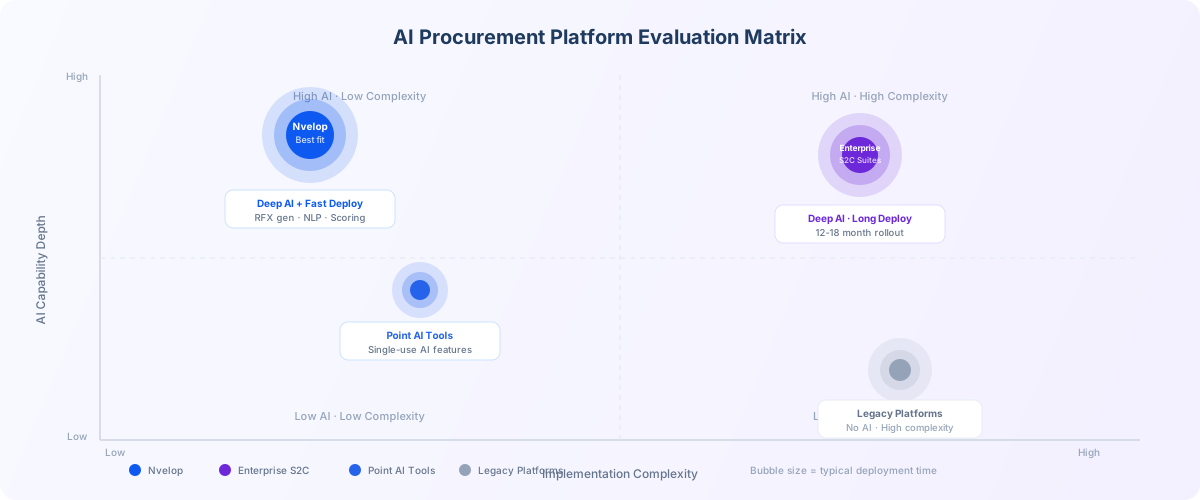
Figure 2: Evaluation matrix for AI procurement platforms - capabilities vs. implementation complexity.
Implementing AI Procurement Automation
Most AI procurement implementations fail because of change management, not technology. People resist AI tools that feel like surveillance or that they don't trust. A successful implementation puts adoption first.
Start with a willing team
Find a procurement team or category manager who is enthusiastic about AI tools. A motivated pilot team will work through problems; a skeptical team will attribute every friction point to AI's failures.
Choose a high-volume, lower-risk category
IT peripherals, office supplies, and MRO categories are common starting points. High transaction volume means fast learning and visible results; lower strategic risk means mistakes don't have major consequences.
Let AI handle first drafts, humans handle decisions
Frame AI as an assistant that creates starting points, not a decision-maker. Procurement teams review, edit, and approve AI outputs. This positioning drives adoption and maintains quality control.
Measure and communicate wins quickly
Document time savings on the first few events. If AI cut RFP creation from two days to four hours, share that data. Early evidence of value builds organizational support for expansion.
Expand category by category
Add new categories as the pilot team develops confidence and best practices. Cross-train other procurement teams from pilot users - peer-to-peer knowledge transfer is more effective than vendor training.
The 90-day implementation target
Set a 90-day target to complete your first AI-assisted sourcing event end-to-end. This timeline is long enough to set up the platform and train the team, but short enough to maintain momentum and demonstrate value before enthusiasm fades.
Measuring and Reporting AI Procurement ROI
AI procurement ROI comes from two sources: efficiency savings (time reduction) and effectiveness improvements (better sourcing outcomes). Both matter for a complete ROI picture.
Efficiency Metrics
- 01Sourcing cycle time (days from need to contract)
- 02RFX creation time (hours per document)
- 03Supplier response analysis time
- 04Number of events completed per FTE
4 metrics to track
Effectiveness Metrics
- 01Price reduction vs. baseline
- 02Number of suppliers evaluated per event
- 03Bid quality scores
- 04Contract compliance rates
4 metrics to track
Business Impact Metrics
- 01Total cost savings attributed to AI-assisted events
- 02Time-to-savings (speed of sourcing cycles)
- 03Risk incidents caught by AI review
- 04Stakeholder satisfaction scores
4 metrics to track
Common AI Procurement Mistakes
- • Measuring AI ROI only on time savings while ignoring quality improvements
- • Deploying AI for complex, strategic sourcing before proving value in tactical categories
- • Treating AI recommendations as final decisions without procurement review
- • Underinvesting in change management and assuming teams will adopt naturally
Frequently Asked Questions About AI Procurement Automation
See AI Procurement in Action
Reduce time-to-contract by 40-70% with Nvelop's AI sourcing platform.
Continue Learning
RFX Automation Course
Deep dive into automating RFP, RFQ, and RFI processes
Enterprise Systems Integration
Connect procurement AI with ERP and finance systems
Nvelop AI Procurement
See the full AI sourcing platform: RFP generation, scoring, compliance, and more
Go Deeper
Claude for Procurement
How to deploy Claude for contract review, spend analytics, and RFx drafting in procurement