
The Complete Source-to-Contract Guide.Seven lessons. The full S2C lifecycle.
Seven lessons covering the complete S2C lifecycle: requirements, RFX, evaluation, award, contracting, CLM, and operating models.
Course Overview
What you will learn.
Source-to-Contract (S2C) is the procurement process that begins when a business identifies a sourcing need and ends when a contract is signed with a supplier. It covers requirements definition, supplier identification, RFX events (RFI/RFP/RFQ), proposal evaluation, award decisions, negotiation, and contract execution. S2C does not include purchase orders, invoicing, or payment; those belong to Source-to-Pay (S2P).
S2C Lifecycle and Stages
7-stage lifecycle
S2C vs S2P
Typical timeline
Standard Artifacts
Requirements document
RFX
Scorecard
Award memo
Contracting Workflows
6 workflow stages
Best practices
Common mistakes
Legal Review and Redlining
Legal review
Redlining
Approval chain
Auditability and Records
Why it matters
What to document
Audit trails
Contract Lifecycle Management
CLM stages
Key activities
S2C and CLM integration
S2C Operating Models
In-house vs outsourcing
Hybrid approach
Platform selection
See how Nvelop runs the full Source-to-Contract cycle in one platform.
Book a DemoLesson 01 of 07
S2C Lifecycle and Stages
Source to Contract (S2C) is the end-to-end process from identifying a business need through sourcing, evaluation, award, and contract execution. It covers everything before purchase orders and payments.
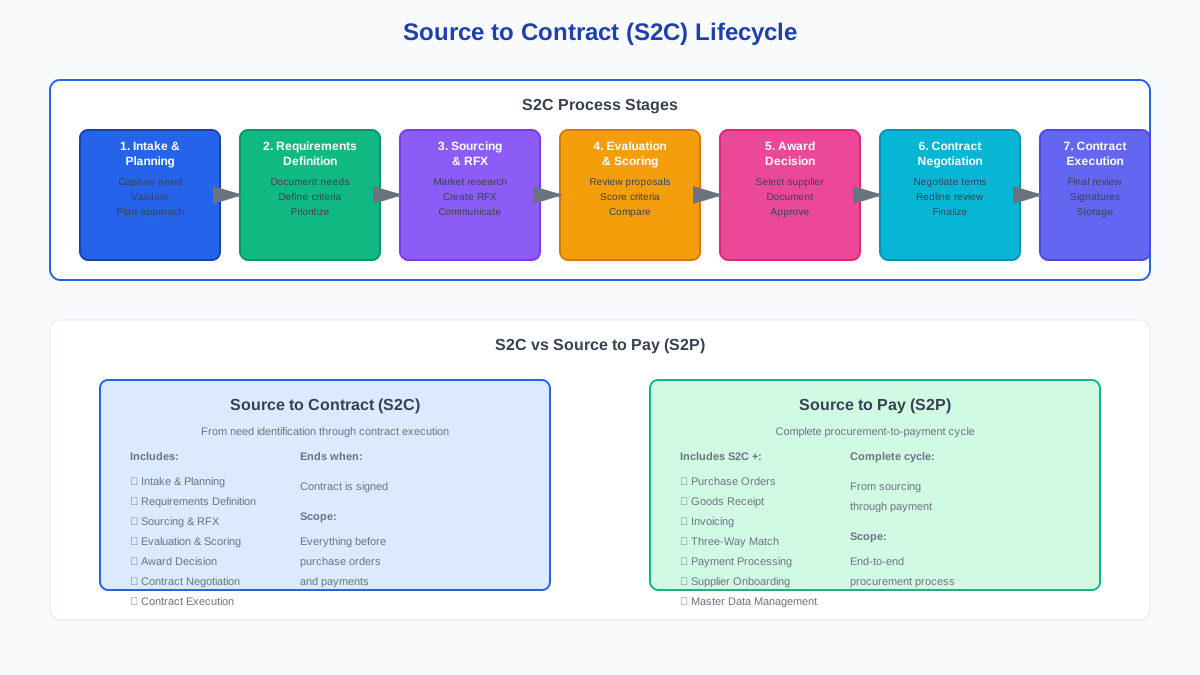
Figure 1: Source to Contract lifecycle
The Seven S2C Stages
Typical S2C flow
Intake
Capture business need and validate the sourcing approach
Requirements
Document functional needs, success criteria, and priorities
RFX
Create and publish RFX, manage supplier communications
Evaluation
Score responses, compare proposals, conduct due diligence
Award
Select supplier, document rationale, obtain approvals
Negotiation
Negotiate terms, resolve redlines, agree on all clauses
Execution
Final approvals, signatures, contract storage, handover
S2C vs S2P
| Dimension | Source-to-Contract (S2C) | Source-to-Pay (S2P) |
|---|---|---|
| Scope | Sourcing through contract execution | Sourcing through invoice payment |
| End point | Signed contract | Invoice paid and reconciled |
| Includes purchase orders | No | Yes |
| Includes invoicing and AP | No | Yes |
| Includes three-way match | No | Yes |
| Primary focus | Supplier selection and contracting | Transactional buying and payment |
| Who leads it | Strategic procurement team | Procurement and accounts payable |
| Best for | Complex, high-value sourcing events | High-volume, repetitive purchases |
| Typical tools | S2C platforms, CLM software | ERP, P2P modules, AP automation |
Typical S2C timeline (strategic sourcing project)
Intake (Week 1) → Requirements (Week 2) → RFX Creation (Week 3) → Supplier Response (Weeks 4-5) → Evaluation (Week 6) → Award (Week 7) → Negotiation (Weeks 8-9) → Execution (Week 10). Approximately 10 weeks for a typical strategic sourcing project.
Pro tip: S2C processes benefit from standardization. Consistent workflows, templates, and approval paths ensure efficiency, compliance, and full auditability. Modern sourcing platforms enforce standardization while maintaining flexibility for complex purchases.
Lesson 02 of 07
Standard Artifacts
S2C processes produce standard documents at each stage. These artifacts capture requirements, communicate with suppliers, evaluate proposals, and document decisions. They are the foundation for auditability.
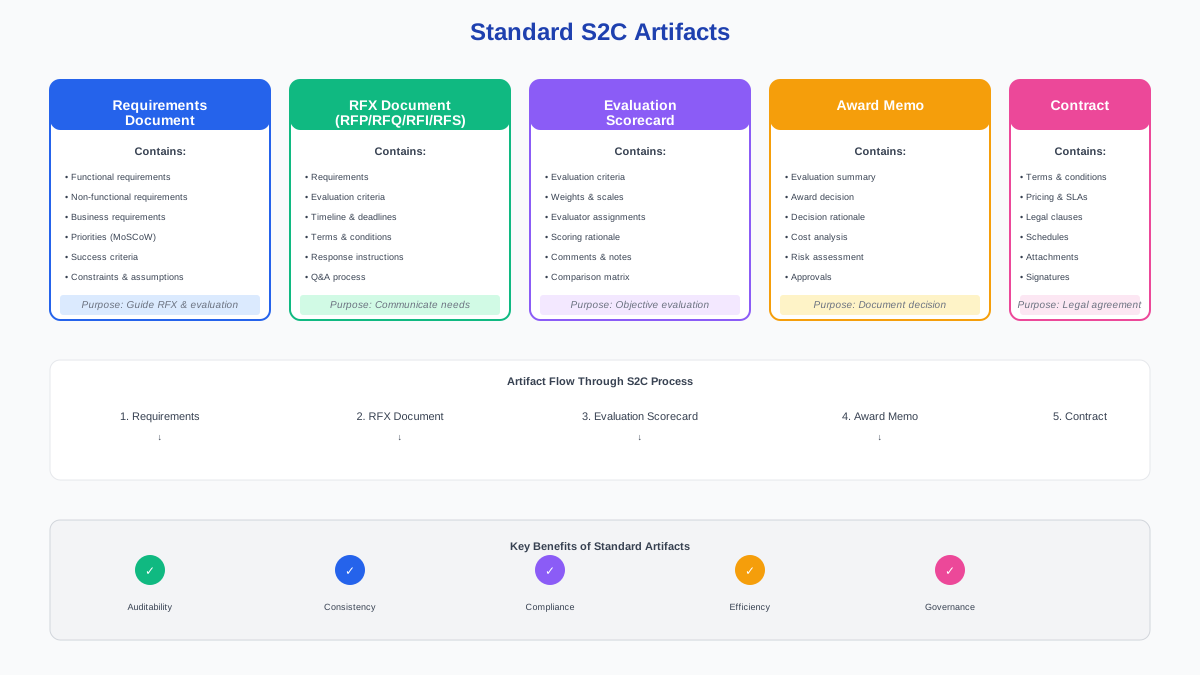
Figure 2: Standard S2C artifacts and their purposes
Core Artifacts
Requirements Document
Captures functional, non-functional, and business requirements. Includes priorities, success criteria, constraints, and assumptions.
Purpose: Ensures stakeholder alignment. Guides RFX creation and evaluation criteria.
RFX Document
Request for Information, Proposal, Quotation, or Solution. Includes requirements, evaluation criteria, timeline, terms, and supplier instructions.
Purpose: Communicates needs to suppliers and sets expectations for the evaluation process.
Evaluation Scorecard
Structured scoring framework with criteria, weights, scales, and evaluator assignments. Includes scoring rationale and comments.
Purpose: Enables objective, consistent evaluation and documents how scores were determined.
Award Memo
Document summarizing evaluation results, award decision, rationale, and approvals. Includes cost analysis and risk assessment.
Purpose: Documents the award decision for stakeholders and auditors. Essential for governance.
Contract
Final executed agreement with terms, pricing, SLAs, legal clauses, and obligations. Includes all schedules and attachments.
Purpose: Legally binding agreement that defines the relationship, obligations, and remedies.
Writing the RFX document: Need help drafting it? Read our guide on how to write an RFP, or see exactly how RFX, RFP, RFQ, and RFI differ before you choose which document type to issue.
Supporting Documents
Supplier Q&A log
Tracks all questions and answers exchanged during the RFX period
Due diligence reports
Supplier financial, legal, and compliance assessments
Reference checks
Feedback gathered from the supplier's existing customers
Negotiation notes
Records of discussions, agreements, and trade-offs
Approval records
Sign-offs from all required stakeholders and approvers
Change logs
Document version history and all modifications
Pro tip: Centralize all S2C artifacts in a single platform. This ensures version control, easy access, and complete auditability. Documents scattered across email and shared drives make audits difficult and create compliance risk.
Lesson 03 of 07
Contracting Workflows
Contracting workflows manage the process from award decision through contract execution. They ensure proper review, approval, and documentation at every stage.
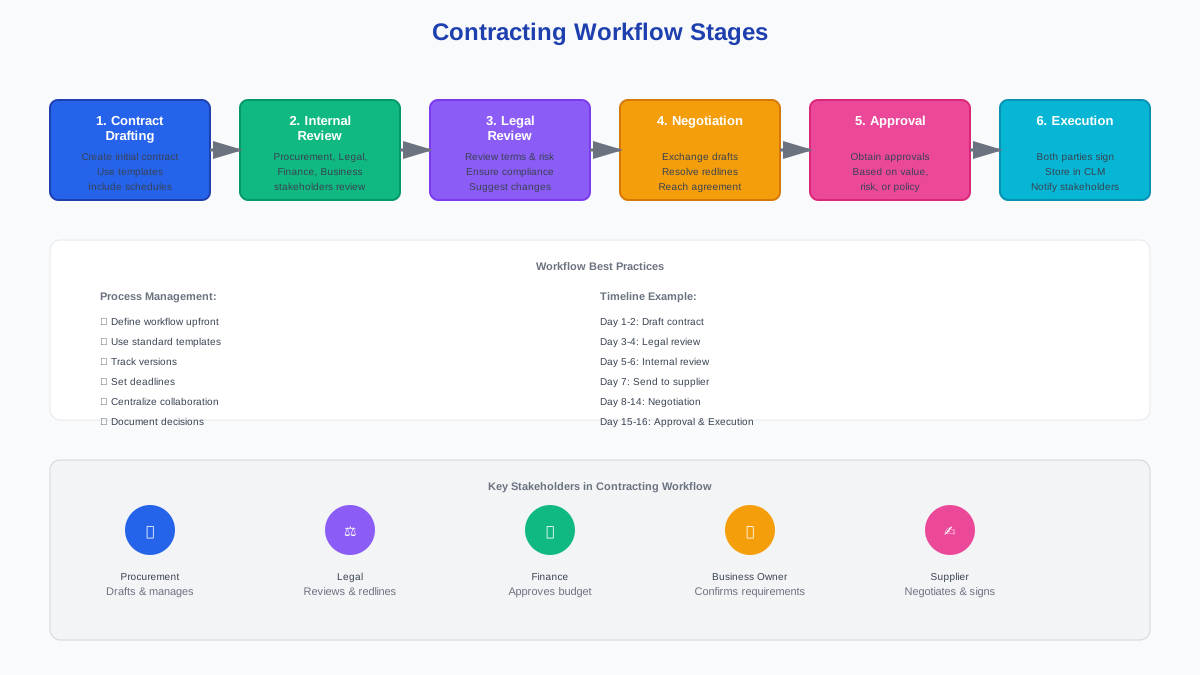
Figure 3: Contracting workflow stages
Contract Workflow Stages
Award to execution flow
Drafting
Create initial contract from award terms and standard templates
Internal Review
Procurement, legal, finance, and business teams review the contract
Legal Review
Legal identifies risks, suggests changes, and ensures compliance
Negotiation
Exchange redlines with supplier and resolve all outstanding issues
Approval
Obtain required sign-offs based on value, risk, and policy
Execution
Both parties sign, contract is stored and stakeholders are notified
Workflow Best Practices
Define the workflow upfront: Know who reviews what, when, and in what order before drafting begins.
Use standard templates: Pre-approved contract templates speed drafting and ensure consistency.
Track versions: Maintain version control so everyone knows which version is current and what changed.
Set review deadlines: Define timelines for each stage to prevent reviews from stalling the process.
Centralize collaboration: Work from a shared platform rather than email to reduce confusion and missed feedback.
Document decisions: Record why changes were made or rejected to support future reviews and audits.
Common mistake: Managing contract workflows via email. This leads to version confusion, missed approvals, and poor auditability. Use structured workflows with clear stages and approval requirements.
Pro tip: Set timeline expectations at the start of every contract cycle. A typical turnaround: Drafting (Days 1-2), Legal review (Days 3-4), Internal review (Days 5-6), Sent to supplier (Day 7), Supplier redlines (Days 8-10), Negotiation (Days 11-14), Final approval (Day 15), Execution (Day 16).
Lesson 04 of 07
Legal Review and Redlining
Legal review ensures contracts protect the organization and comply with applicable laws and policies. Redlining tracks changes during negotiation. Approvals ensure proper authorization before execution.
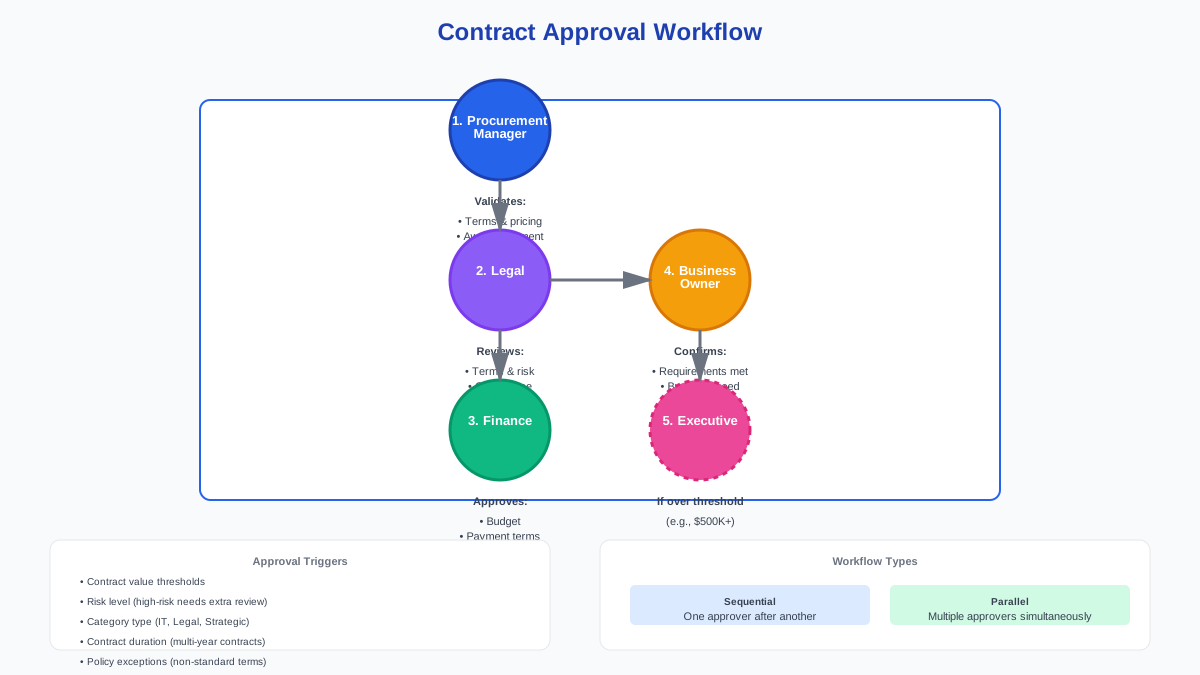
Figure 4: Typical contract approval workflow
What Legal Teams Review
Risk assessment
Identify legal, financial, and operational risks in the contract.
Compliance
Ensure terms comply with applicable laws, regulations, and internal policies.
Standard terms
Verify use of approved contract language and pre-approved clauses.
Liability and indemnity
Assess risk allocation, liability caps, and indemnification provisions.
Termination and remedies
Review exit clauses, termination rights, and dispute resolution processes.
Data protection
Ensure GDPR, CCPA, and other data privacy requirements are properly covered.
Redlining Best Practices
Show changes clearly: Use tracked changes or redline tools so all modifications are visible and attributable.
Explain the reason: Add comments explaining why each change is needed, not just what changed.
Respond to all redlines: Accept, reject, or counter every supplier redline. Silence creates ambiguity.
Maintain version control: Keep a clear version history so both parties always know which draft is current.
Typical Approval Chain
Procurement Manager: Validates terms and pricing against the award decision
Legal: Reviews terms, assesses risk, and confirms compliance
Finance: Approves budget and payment terms
Business Owner: Confirms all requirements are met in the final contract
Executive: Required if contract value exceeds threshold (e.g., $500K+)
Pro tip: Configure approval workflows in your sourcing platform so routing happens automatically. This prevents skipped approvals and maintains a complete audit trail. Approvals can run sequentially or in parallel depending on your policy.
Lesson 05 of 07
Auditability and Decision Records
Auditability means being able to demonstrate who made what decisions, when, and why. Complete decision records protect the organization, ensure compliance, and enable continuous improvement.
Why Auditability Matters
Compliance
Regulatory audits require proof of proper processes and decisions.
Risk management
Document decisions so you can defend them if challenged or if issues arise later.
Governance
Demonstrate proper oversight and control to leadership and auditors.
Transparency
Show stakeholders clearly how and why decisions were made.
Learning
Review past decisions to identify patterns and improve future processes.
What to Document
Decision Points
- Supplier selection rationale
- Evaluation scores and methodology
- Price comparisons and value analysis
- Risk assessments
- Approval decisions and rationale
Process Activities
- All communications with suppliers
- Q&A exchanges and responses
- Document versions and changes
- Approval workflows and sign-offs
- Negotiation history and agreements
Stakeholder Actions
- Who participated in evaluation
- Who approved what and when
- Who made changes and why
- Who had access to information
Audit Trail Requirements
Immutable logs: Records that cannot be altered or deleted after the fact.
Timestamped actions: Every action recorded with date, time, and timezone.
User attribution: Each action attributed to a specific person in the system.
Change history: What changed, from what to what, and the stated reason.
Version control: Complete history of all document versions and modifications.
Pro tip: Modern sourcing platforms automatically create audit trails. Every action is logged with who, what, when, and why, without manual effort. Auditors can review complete decision records in minutes rather than reconstructing them from email threads and spreadsheets.
Nvelop Platform
Nvelop automates the full S2C cycle.
Requirements capture, AI-generated RFX, automated evaluation and scoring, award memo, and contract management - all in one platform. See it in action.
Lesson 06 of 07
Contract Lifecycle Management
CLM connects your S2C process to ongoing contract management, ensuring every executed contract is tracked from creation through renewal or termination. Effective CLM reduces risk, improves visibility, and automates key milestones.
Contract Lifecycle Stages
Creation
S2C stageDraft contract based on award terms, templates, and negotiations.
Execution
S2C stageContract signed by both parties. Stored in contract repository.
Active Management
Post-S2CMonitor performance, track obligations, manage changes and disputes.
Renewal / Termination
Post-S2CAt contract end, decide to renew, renegotiate, or terminate.
Key CLM Activities
Contract storage: Centralized repository with search, retrieval, and access controls.
Obligation tracking: Monitor deliverables, milestones, and contractual commitments.
Performance monitoring: Track SLAs, KPIs, and supplier performance against contract terms.
Change management: Handle amendments, addendums, and contract modifications formally.
Renewal management: Track expiration dates, initiate renewals, and renegotiate terms proactively.
Compliance monitoring: Ensure contract terms are being followed and identify violations early.
How S2C and CLM Work Together
S2C creates the contract and hands it to CLM for execution and ongoing tracking.
CLM stores the executed contract and manages it through its full lifecycle.
At renewal, CLM can trigger a new S2C cycle to re-source or renegotiate terms.
Performance data from CLM informs future S2C decisions and supplier selection.
Pro tip: CLM works best when S2C and CLM systems are integrated. When a contract is executed in S2C, it should automatically appear in CLM. This eliminates manual data entry and ensures contracts are properly managed from day one.
Lesson 07 of 07
S2C Operating Models
A key strategic decision is whether to run S2C in-house, outsource to a managed service provider, or adopt a hybrid model. Each approach has different cost, control, and capability trade-offs.
In-House vs S2C Outsourcing
Built internally
In-House S2C
Advantages
- Full control over processes and data
- Deep ERP integration and custom workflows
- Better suited to regulated or proprietary sourcing
- Long-term cost optimization once capability is built
Considerations
- 6 to 18 months to build capability
- Fixed headcount plus technology investment
- Dependent on internal hiring and retention
- Scales linearly with volume
Platform or managed service
S2C Outsourcing
Advantages
- Weeks to deploy with a pre-built platform
- Variable or per-transaction pricing
- Access to specialist procurement knowledge
- Elastic scaling with spend volume
Considerations
- Shared governance model reduces full control
- Requires process alignment with the provider
- Strategic decisions still need internal ownership
- Dependency on provider performance
Hybrid approach
Many organizations keep strategic sourcing decisions in-house while outsourcing RFX execution and transactional S2C activities to a platform. This captures the cost and speed benefits of outsourcing without giving up strategic control.
S2C Platform Selection Criteria
Sourcing and RFX
- AI-generated RFP, RFQ, and RFI documents
- Structured vendor Q&A management
- Configurable pricing templates
- Multi-round sourcing support
Evaluation and Scoring
- Weighted scorecard builder
- Automated proposal scoring
- Side-by-side vendor comparison
- Full audit trail of scores and decisions
Contract Management
- Contract authoring and clause libraries
- Redlining and version control
- Obligation and renewal tracking
- Integration with CLM systems
Compliance and Governance
- Role-based access and approvals
- Compliance checklist automation
- Document retention and audit logs
- Policy enforcement in workflows
Integration and Scalability
- ERP and P2P system connectors
- SSO and enterprise security
- API access for custom workflows
- Multi-category and multi-region support
AI and Automation
- AI document generation and analysis
- Automated scoring and risk flagging
- Supplier discovery assistance
- Continuous learning from past projects
Evaluation and response handling vary by platform: See how automated vendor evaluation and scoring and structured vendor response and Q&A management work inside Nvelop.
Pro tip: Not all S2C platforms cover the full lifecycle. Evaluate whether a platform truly supports end-to-end sourcing, or only part of it. A platform that handles RFX but not contracting, or contracting but not evaluation, will require additional tools and create process gaps.
Buyer's Guide
Choosing S2C software: what to evaluate.
S2C platforms range from point solutions covering only RFX to fully integrated suites with AI automation. Use this checklist when evaluating any source-to-contract SaaS solution.
| Capability to evaluate | Why it matters | Must-have |
|---|---|---|
| AI-powered RFP and RFQ generation | Removes 10+ hours of manual document drafting per sourcing event | ✓ |
| Automated vendor proposal scoring | Eliminates manual spreadsheet scoring and reduces evaluation bias | ✓ |
| Structured vendor Q&A management | Centralises supplier questions so no response leaks through email | ✓ |
| Audit trail for all decisions | Required for regulatory compliance and internal governance reviews | ✓ |
| Contract authoring and redlining | Keeps contracting inside the platform instead of switching to Word | ✓ |
| ERP and CLM integration | Avoids a second data entry step when moving from award to PO or contract | ✓ |
| Role-based access and approvals | Ensures the right stakeholders review and approve at each stage | ✓ |
| Multi-category support | One platform for IT, facilities, marketing, and direct spend avoids tool sprawl | - |
See Nvelop's S2C platform: Nvelop covers every must-have in this checklist - AI-generated RFPs, automated scoring, contract redlining, and full audit trails - in a single platform. Explore S2C Features →
FAQ
Frequently asked questions.
Common questions about Source to Contract processes, artifacts, and operating models.
Test Your Knowledge
Source to Contract Quiz
Ready to test what you have learned? Take the quiz to assess your understanding of S2C stages, standard artifacts, contracting workflows, and CLM across all seven lessons.
Apply What You Learned
S2C templates, calculators, and guides.
Take the framework from this lesson into practice with downloadable templates, an ROI calculator, and our enterprise sourcing white paper.
Keep learning
Related Courses
Nvelop S2C Platform
See how Nvelop automates the full source-to-contract cycle with AI.
Best S2C Platforms
Compare leading source-to-contract platforms on AI capabilities, implementation time, and cost.
Source-to-Pay (S2P)
Extend S2C with purchase orders, invoicing, three-way match, and supplier payment.
RFX Explained
When to use RFI, RFP, RFQ, and RFS - and how to run each type of sourcing event.
What is Spend Analytics
How spend data is collected, classified, and turned into savings opportunities across your supply base.
Sourcing Fundamentals
The complete step-by-step sourcing process from intake through award decisions.
Using Nvelop (Platform Walkthrough)
9-module step-by-step walkthrough of the full sourcing lifecycle inside Nvelop - from project setup through to close.
Course complete.
You have covered the full Source to Contract lifecycle. Ready to explore sourcing fundamentals or the complete source-to-pay journey?