
Build compliance intoyour sourcing process.
Automated policy enforcement, complete audit trails, and on-demand documentation so you're never scrambling before a review.
Course Overview
What Are Audit-Ready Compliance Platforms?
An audit-ready compliance platform for sourcing is a procurement system that automatically enforces organizational policies, captures a complete audit trail for every decision, and generates the documentation auditors need on demand. Automated audit readiness means your compliance posture is maintained continuously throughout the procurement lifecycle, rather than assembled retroactively before an audit.
15 min read
6 Lessons
Intermediate
Compliance & Procurement
Last updated: August 21, 2026
What Is Audit-Ready Compliance in Procurement?
Audit-ready compliance means every procurement decision, from vendor selection to contract award, is documented, justified, and retrievable at any time. Instead of scrambling to assemble evidence before an audit, your sourcing platform continuously generates the documentation auditors expect.
Policy Enforcement
Rules are enforced automatically at every step, blocking non-compliant actions before they occur. No exceptions, no workarounds.
Complete Audit Trails
Every action is automatically logged with timestamps, user attribution, and full decision context from start to award.
On-Demand Documentation
Compliance reports and audit packages generated instantly from live data, not manually assembled before each review.
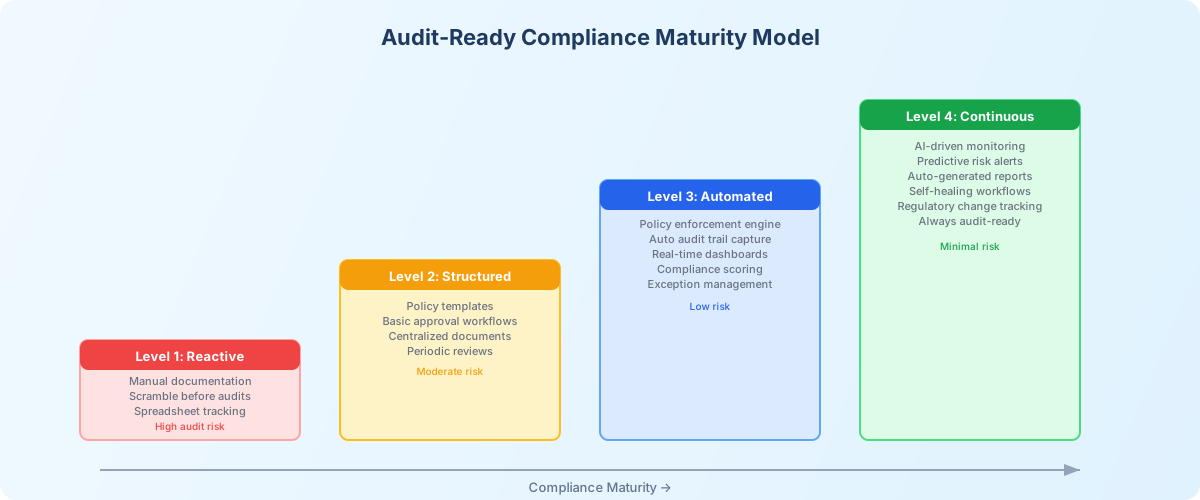
Figure 1: The four stages of compliance maturity, from reactive scrambling to continuous, automated audit readiness.
The Cost of Non-Compliance and Manual Audit Prep
Organizations relying on manual compliance tracking face both direct costs (fines, failed audits) and hidden costs (time spent reconstructing decisions, delayed procurement cycles, and reputational risk).
- 3-5x more time spent on audit preparation
- Incomplete or missing audit trails
- Inconsistent documentation across teams
- Policy violations detected only after the fact
- Difficulty reconstructing decision rationale
- No real-time visibility into compliance posture
- Continuous compliance, always audit-ready
- 100% audit trail coverage, zero gaps
- Standardized documentation across all events
- Real-time policy enforcement prevents violations
- Full decision context captured automatically
- Dashboards show compliance status in real time
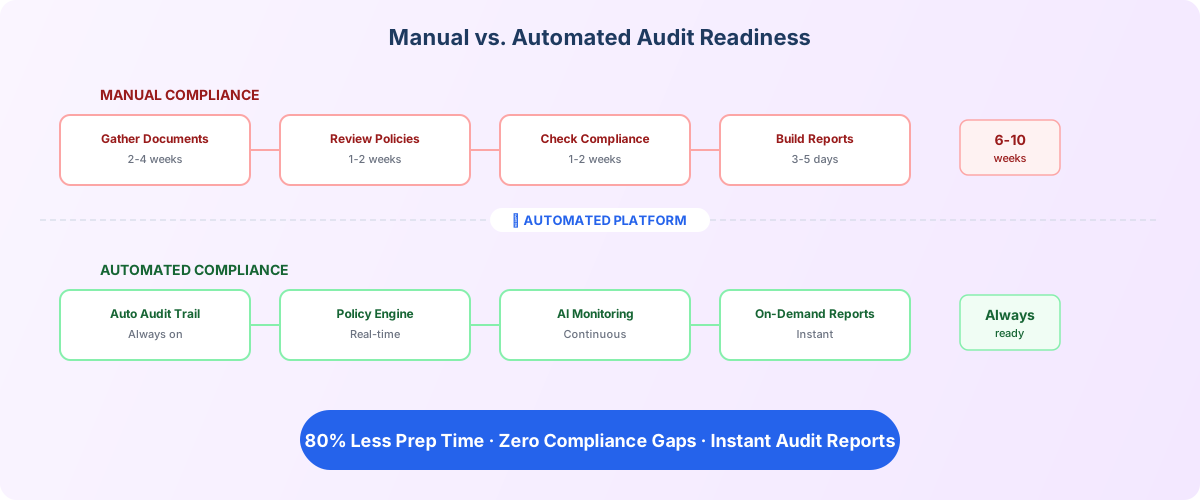
Figure 2: Manual compliance prep takes 6-10 weeks per audit. Automated platforms keep you always ready.
Core Features of Audit-Ready Compliance Platforms
Not all procurement platforms are equally prepared for audits. Here are the capabilities that distinguish truly audit-ready compliance documentation platforms from basic procurement tools.
Immutable Audit Logs
Every action (document creation, vendor communication, score entry, and approval) is recorded in a tamper-proof log with timestamp, user ID, and action context.
Configurable Policy Rules
Define and enforce procurement policies as system rules: minimum vendor counts, approval thresholds, mandatory evaluation criteria, and required documentation per category.
Auto-Generated Reports
Generate audit packages, compliance summaries, evaluation scorecards, and approval chain documentation automatically from event data, no manual assembly required.
Compliance Dashboards
Real-time visibility into compliance status across all active sourcing events, with alerts for policy exceptions, overdue approvals, and documentation gaps.
Automated Policy Enforcement and Controls
The most effective audit-ready compliance platforms for sourcing don't just log what happened; they prevent non-compliant actions from occurring in the first place. Here's how automated policy enforcement works in practice.
Approval Hierarchies
Automatically route decisions to the right approver based on contract value, category, risk level, or department. Block progression until required approvals are obtained.
Minimum Competition Requirements
Enforce minimum vendor participation thresholds per category. The system prevents award decisions unless the required number of qualified vendors have submitted proposals.
Mandatory Documentation Checks
Require specific documents, justifications, or declarations at each stage - conflict-of-interest declarations before evaluation access, or sole-source memos for non-competitive awards.
Scoring Threshold Enforcement
Prevent award recommendations that don't meet minimum scoring thresholds. Flag evaluators whose scores deviate significantly from consensus for review.
Prevention vs. Detection
The shift from manual to automated compliance is fundamentally a shift from detection to prevention. Manual processes catch violations after the fact (during audits). Automated systems prevent violations from occurring, a far more cost-effective approach that also eliminates remediation risk.
Building an Automated Audit Readiness Program
Implementing automated audit readiness is a transformation project, not a software installation. Here's a phased approach to building a program that keeps your procurement team audit-ready at all times.
Phase 1: Policy Mapping (Weeks 1-4)
Document all procurement policies, approval thresholds, and compliance requirements. Identify which are enforceable through system rules and which need process controls.
Policies
Document all rules
Thresholds
Define approval levels
Categories
Map by risk level
Gaps
Identify coverage gaps
Phase 2: System Configuration (Weeks 5-8)
Configure the compliance rules in your procurement platform. Set up approval workflows, mandatory fields, documentation requirements, and scoring thresholds.
Workflows
Approval routing
Rules
Enforcement logic
Templates
Standard documents
Reports
Audit packages
Phase 3: Rollout and Continuous Improvement (Weeks 9-12+)
Pilot with one department, validate audit readiness with internal audit, then expand organization-wide. Monitor compliance dashboards and refine rules based on real-world exceptions.
Pilot
One department first
Validate
Internal audit check
Expand
Organization-wide
Refine
Continuous tuning
Compliance Documentation Best Practices
Even with automated systems, the quality of your compliance documentation depends on how well you configure and use the platform. Follow these best practices to maximize audit readiness.
Document decision rationale, not just outcomes
Auditors want to know why a vendor was selected, not just who was selected. Ensure your platform captures evaluation notes, scoring justifications, and award rationale.
Standardize across all sourcing events
Use the same compliance framework for every event, regardless of size or category. Consistency is what auditors look for; exceptions create risk.
Test audit readiness regularly
Run quarterly self-audits using the same criteria external auditors would apply. Use your platform's reporting to generate sample audit packages and verify completeness.
Train all stakeholders on compliance requirements
The platform enforces the rules, but stakeholders need to understand why. Regular training reduces friction and builds a compliance-first culture across procurement teams.
Common Compliance Mistakes to Avoid
- • Relying on email as your audit trail, it's fragmented and unsearchable
- • Treating compliance as a one-time setup rather than continuous process
- • Not testing your audit documentation until an actual audit occurs
- • Allowing exceptions without documented justification and approval
Frequently Asked Questions About Audit-Ready Compliance
Stop Scrambling Before Audits.
See how Nvelop builds compliance into every step of your source-to-contract lifecycle so every decision is documented and retrievable on demand.