
Categories turn spend into strategy.From spend analysis to category plan.
Seven lessons: spend analysis, the Kraljic Matrix, market intelligence, TCO, and category planning.
Course Overview
What you will learn.
Category management is a procurement strategy that groups related spend into categories (e.g., IT, logistics, professional services) and manages each as a distinct business unit with its own market analysis, sourcing strategy, and supplier relationships. The goal is to maximize total value across the category, not just reduce unit costs. It typically uses the Kraljic Matrix to prioritize categories by spend and supply risk.
Category Management Fundamentals
What is category management
Benefits
Category structure
Spend Analysis
Spend analysis process
Key metrics
Category segmentation
Category Strategies
Kraljic Matrix
Strategic
Leverage
Bottleneck
Routine
Market Analysis
Market structure
Supplier intelligence
Pricing trends
Total Cost of Ownership
TCO components
TCO analysis process
Cost comparison
Category Planning
Category plan
Roadmap
Stakeholder alignment
Category-Specific Approaches
IT
Professional services
Marketing
Facilities
See how Nvelop runs category strategy, spend analysis, and sourcing in one platform.
Book a DemoLesson 01 of 07
Category Management Fundamentals
Category management groups related spend and manages it as a business unit, with a dedicated strategy and category owner. The goal is to maximize total value, not just reduce price.
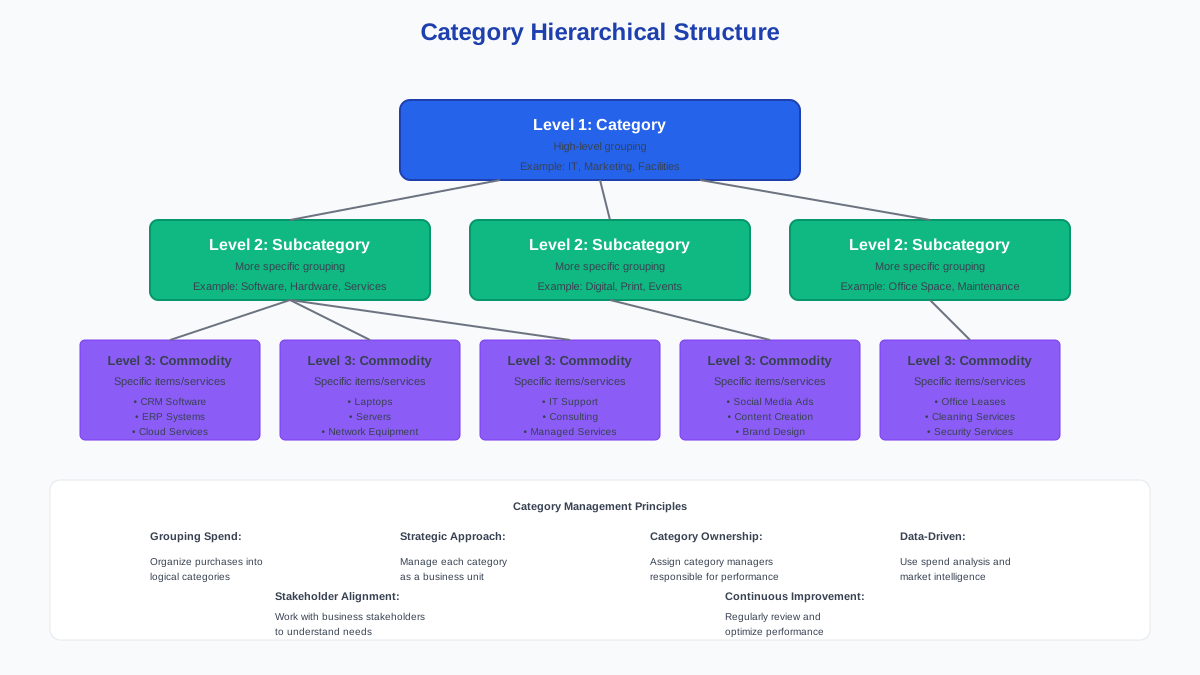
Figure 1: Category hierarchical structure
What Category Management Involves
Grouping spend
Organizing purchases into logical categories: IT, Marketing, Facilities, and so on.
Strategic ownership
Assigning category managers responsible for strategy, performance, and outcomes.
Data-driven decisions
Using spend analysis and market intelligence to inform category strategies.
Stakeholder alignment
Working with business units to understand needs and priorities for each category.
Supplier management
Managing supplier relationships based on category importance and risk profile.
Continuous improvement
Regularly reviewing and optimizing category performance against targets.
Benefits of Category Management
Cost Savings
Consolidate spend, leverage volume, negotiate better terms, reduce maverick spending.
Value Optimization
Focus on total value, not just price. Consider quality, service, innovation, and risk.
Strategic Alignment
Align procurement with business strategy and support organizational objectives.
Risk Management
Identify and mitigate category risks. Ensure supply security and manage supplier relationships.
Category Hierarchy
Level 01
Category
Examples
IT, Marketing, Facilities
High-level grouping aligned to business function or spend type.
Level 02
Subcategory
Examples
Software, Hardware, Services
More specific grouping within the category.
Level 03
Commodity
Examples
Laptops, CRM software, Cleaning services
Specific items or services that are sourced and managed.
Pro tip: Start with 10 to 15 major categories. Too many categories dilute focus. Too few miss opportunities. Adjust based on your organization size and spend complexity.
Lesson 02 of 07
Spend Analysis
Spend analysis is the foundation of category management. It reveals what is being purchased, from whom, at what cost, and where savings and consolidation opportunities exist.
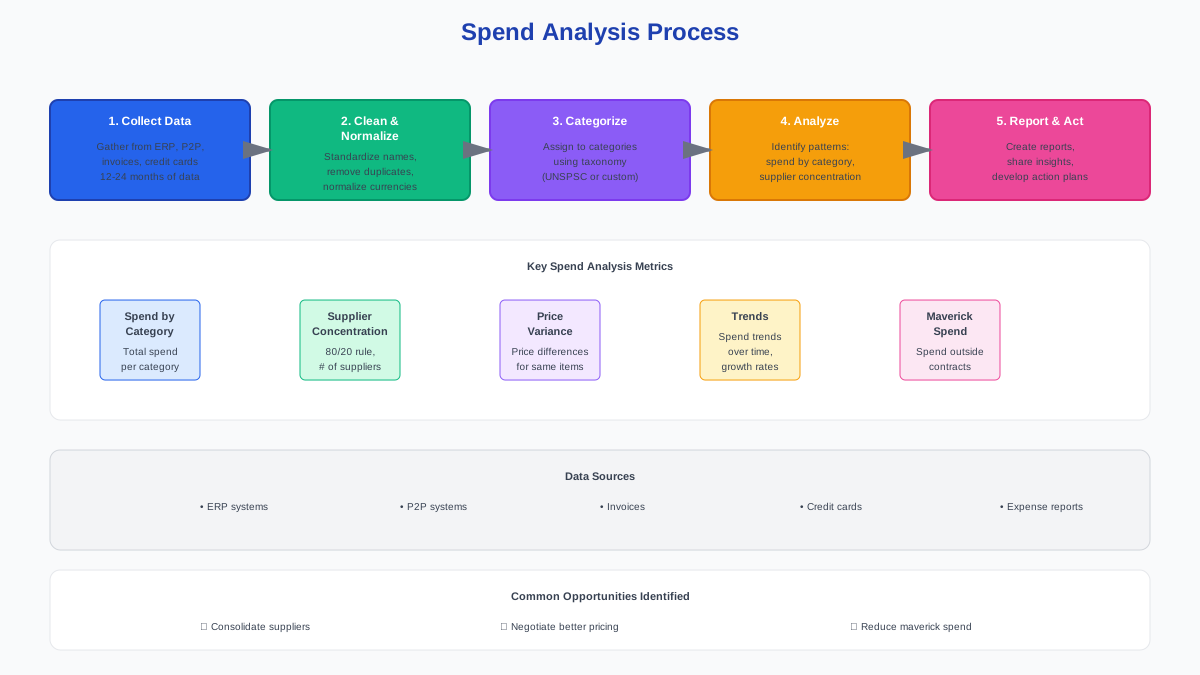
Figure 2: Spend analysis process flow
The Five-Step Process
Data to action flow
Collect
Gather spend data from ERP, P2P, invoices, cards, expense reports (12-24 months)
Clean
Standardize supplier names, remove duplicates, normalize currencies and data
Categorize
Assign spend to categories using taxonomy (UNSPSC or custom). Review for accuracy
Analyze
Identify patterns: spend concentration, price variance, trends, opportunities
Act
Create reports, prioritize opportunities, develop and execute action plans
Key Spend Metrics
Spend by category
Total spend per category. Identifies where the most money is going and where to focus.
Supplier concentration
Number of active suppliers and spend distribution. Reveals consolidation potential (80/20 rule).
Price variance
Price differences for the same items across suppliers, locations, or time periods.
Spend trends
How category spend is changing over time. Surfaces growth, decline, and seasonal patterns.
Maverick spend
Spend outside contracts or with non-preferred suppliers. Indicates compliance gaps.
Contract coverage
Percentage of total spend that is under a contract. A key maturity indicator.
Pro tip: Spend analysis is not a one-time exercise. Running it quarterly allows you to track the impact of sourcing initiatives, spot emerging patterns, and catch maverick spend before it becomes entrenched.
See spend analysis in Nvelop: Nvelop's analytics module connects to your ERP, normalises supplier data automatically, and delivers 25+ prebuilt spend reports across categories, suppliers, and contracts. Explore Spend Analytics →
Lesson 03 of 07
Category Strategies
The Kraljic Matrix places each category into one of four quadrants based on profit impact and supply risk. Each quadrant calls for a different sourcing strategy.
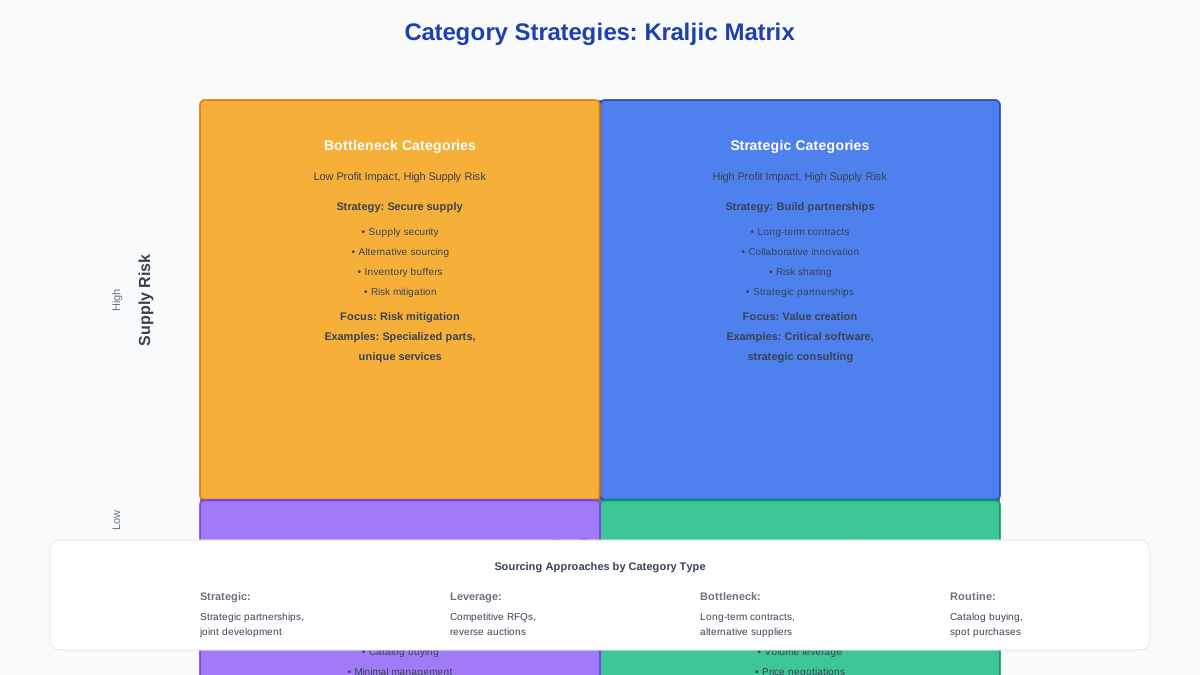
Figure 3: Kraljic Matrix, four category quadrants
The Four Quadrants
Strategic
High impact · High risk
Focus: Value creation, innovation, strategic alignment, relationship management.
Approach: Long-term partnerships, joint development, collaborative sourcing.
Examples: Critical software, strategic consulting, key components, core services.
Leverage
High impact · Low risk
Focus: Price reduction, cost savings, volume consolidation, standardization.
Approach: Competitive RFQs, reverse auctions, volume commitments, price negotiations.
Examples: Office supplies, IT hardware, travel, utilities, MRO.
Bottleneck
Low impact · High risk
Focus: Supply security, risk mitigation, alternative sourcing, inventory management.
Approach: Long-term contracts, alternative suppliers, inventory buffers, contingency planning.
Examples: Specialized parts, unique services, rare materials, niche suppliers.
Routine
Low impact · Low risk
Focus: Automation, standardization, efficiency, minimal management overhead.
Approach: Catalog buying, spot purchases, standard contracts, automated ordering.
Examples: Office consumables, cleaning services, basic maintenance.
Pro tip: Categories move between quadrants over time as market conditions and business priorities change. Review your Kraljic positioning at least once a year. A bottleneck category that attracts new suppliers may move to routine, unlocking efficiency opportunities.
Lesson 04 of 07
Market Analysis and Supplier Intelligence
Market analysis helps you understand the supply landscape, identify opportunities, and make informed sourcing decisions. It should be ongoing, not just a pre-event exercise.
Market Analysis Components
Market size and structure
Understand market size, growth trends, key players, market concentration, and competitive dynamics.
Sources: Industry reports, market research, trade associations, financial data.
Supplier landscape
Identify potential suppliers, assess capabilities, evaluate financial stability, and understand positioning.
Sources: Supplier databases, RFIs, industry directories, references.
Pricing trends
Understand pricing models, market rates, price trends, cost drivers, and pricing benchmarks.
Sources: Market intelligence, benchmarks, RFQs, industry data.
Technology and innovation
Identify emerging technologies, innovation trends, new solutions, and market disruptors.
Sources: Technology reports, innovation forums, supplier presentations, conferences.
Risk factors
Identify market risks, supply risks, regulatory risks, geopolitical risks, and economic factors.
Sources: Risk assessments, news, regulatory updates, economic reports.
Regulatory environment
Understand compliance requirements, industry standards, certifications, and legal considerations.
Sources: Regulatory bodies, legal counsel, compliance frameworks, industry standards.
Supplier Intelligence Checklist
Financial health: Financial statements, credit ratings, stability, and growth trajectory.
Capabilities: Products and services, capacity, technology, expertise, and certifications.
Performance history: Customer references, case studies, performance records, and awards.
Market position: Market share, competitive position, differentiation, strengths and weaknesses.
Strategic direction: Business strategy, investments, partnerships, and future product roadmap.
ESG and compliance: Sustainability practices, ethical sourcing, compliance certifications, and risk profile.
Pro tip: Market analysis should be continuous, not just a pre-sourcing-event activity. Regular market monitoring helps you identify opportunities and risks early, and gives you leverage in negotiations with current suppliers.
Build and execute category and sourcing plans without leaving Nvelop.
See Category PlanningLesson 05 of 07
Total Cost of Ownership
Total Cost of Ownership (TCO) considers every cost associated with a purchase, not just the purchase price. It helps avoid the common trap of selecting the cheapest option that costs the most to own.
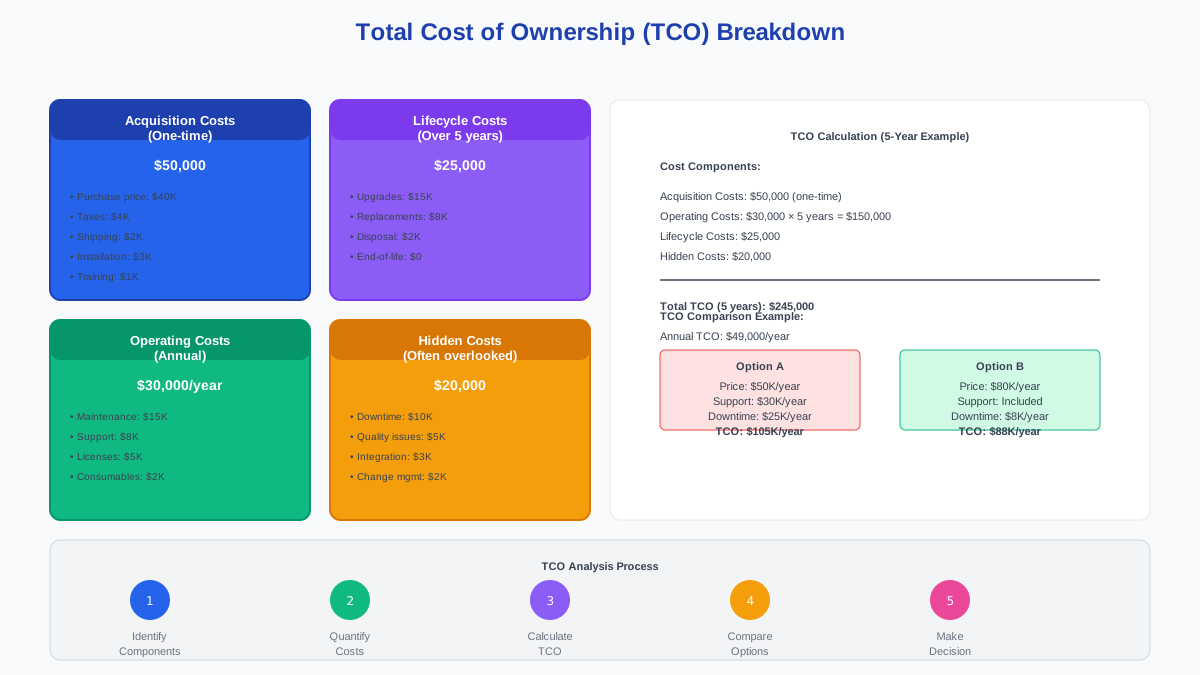
Figure 4: Total Cost of Ownership breakdown
TCO Components
Acquisition costs
- Purchase price
- Taxes and duties
- Shipping and delivery
- Installation and setup
- Initial training
Operating costs
- Maintenance and support
- Licenses and subscriptions
- Consumables and utilities
- Ongoing training
Lifecycle costs
- Upgrades and enhancements
- Replacements and refresh
- End-of-life disposal
- Migration costs
Hidden costs
- Downtime and outages
- Quality failures
- Integration complexity
- Change management
- Risk costs
TCO Analysis Process
Identify cost components: List all cost categories for each option: acquisition, operating, lifecycle, and hidden costs.
Quantify costs: Estimate or calculate costs for each component using historical data, benchmarks, and supplier quotes.
Calculate TCO: Sum all costs over the full lifecycle. Consider NPV for long-term or capital-intensive analysis.
Compare options: Compare TCO across options. Also weigh non-cost factors: quality, risk, service, and innovation.
Make the decision: Use TCO to inform the decision. Lowest TCO does not always mean the best overall choice.
Example: Software Option A costs $50K per year, Option B costs $80K. Option A requires $30K in support and carries a 5% downtime cost ($25K). Option B includes support and has 1% downtime ($8K). TCO over one year: Option A = $105K, Option B = $88K. Option B is cheaper to own despite the higher sticker price.
Lesson 06 of 07
Category Planning and Roadmaps
A category plan defines the strategy and initiatives for a category over a 1 to 3 year horizon. A roadmap sequences those initiatives over time and provides milestones for tracking progress.
Category Plan Components
Category overview: Current state, spend, suppliers, performance, and challenges.
Objectives: Goals for cost savings, value, risk reduction, and innovation.
Strategy: Approach based on Kraljic Matrix positioning.
Initiatives: Specific projects and activities to achieve objectives.
Stakeholders: Key stakeholders, their needs, and engagement approach.
Success metrics: KPIs to measure savings, performance, and compliance.
Timeline: Roadmap with milestones and target completion dates.
Resources: Budget, headcount, and tools required to execute.
Category Roadmap
Foundation
Spend analysis, market research, stakeholder alignment, quick wins, process improvement.
Optimization
Strategic sourcing events, supplier consolidation, contract optimization, performance improvement.
Innovation
Partnership development, innovation initiatives, value creation, and continuous improvement programs.
Stakeholder Alignment
Understand needs: Meet with stakeholders to understand requirements, priorities, and constraints.
Communicate value: Explain clearly how category management benefits each stakeholder group.
Involve in planning: Include key stakeholders in the category planning process, not just the execution.
Report progress: Provide regular updates on initiative progress, results, and upcoming activities.
Pro tip: A category plan without stakeholder buy-in rarely gets executed. Spend time upfront building alignment with business owners. A collaborative planning process produces better strategies and far stronger commitment to delivery.
Lesson 07 of 07
Category-Specific Sourcing Approaches
The core category management principles apply universally, but each category has specific considerations that shape how those principles are applied in practice.
IT
Considerations: Rapid technology change, vendor lock-in, integration requirements, security, compliance.
Approach: Technology evaluation, vendor assessment, proof of concepts, flexible contracts, exit strategies.
Key terms: Licensing models, support levels, SLAs, data security, IP rights, termination rights.
Professional Services
Considerations: Expertise, experience, cultural fit, team composition, project management capability.
Approach: Capability assessment, case studies, references, interviews, pilot projects.
Key terms: Rate structures, deliverables, change management, IP ownership, non-compete clauses.
Marketing and Creative
Considerations: Creative quality, brand alignment, turnaround time, portfolio, and visual style.
Approach: Portfolio review, creative briefs, competitive pitches, relationship building.
Key terms: Usage rights, revision cycles, approval process, IP ownership, exclusivity.
Facilities and Real Estate
Considerations: Location, space requirements, lease terms, maintenance obligations, and compliance.
Approach: Location analysis, space planning, lease negotiations, facility management strategy.
Key terms: Lease duration, renewal options, maintenance responsibilities, compliance, termination.
Pro tip: Build category-specific knowledge over time. The more you understand a market, its suppliers, and its cost drivers, the more effective your sourcing strategies become. Category expertise is a long-term competitive advantage for procurement teams.
FAQ
Frequently asked questions.
Common questions about category management, the Kraljic Matrix, spend analysis, and TCO.
Test Your Knowledge
Category Management Quiz
Ready to test what you have learned? Take the quiz to assess your understanding of the Kraljic Matrix, spend analysis, TCO, and category planning across all seven lessons.
Keep learning
Related Courses
Nvelop Spend Analytics
25+ prebuilt spend reports, AI-powered classification, and ERP connectors - the analytics layer for category management.
Supplier Management
Segmentation, performance management, risk assessment, and SRM best practices.
Source-to-Contract (S2C)
Master every S2C stage: requirements, RFX, evaluation, award, and contract execution.
Parts Standardization
How to standardize parts across business units to aggregate demand and cut costs.
Course complete.
You have covered category management from fundamentals to advanced strategies. Ready to explore sourcing fundamentals or the complete S2C process?