
Best Source-to-Contract Platforms 2026
Everything you need to know about selecting and implementing an S2C platform, from key features to standardizing RFX across business units.
A Source-to-Contract (S2C) platform is software that manages the complete upstream procurement lifecycle in one system, from identifying a sourcing need through requirements, RFX events, supplier evaluation, award, negotiation, and contract execution. It replaces disconnected spreadsheets, email threads, and point tools with an integrated workflow that keeps all sourcing data, decisions, and documentation in one place.
What is a Source-to-Contract Platform?
A source-to-contract (S2C) platform manages the entire upstream procurement lifecycle, from identifying a sourcing need to executing a contract, in a single, unified system. Instead of juggling spreadsheets, email threads, and disconnected tools, S2C platforms provide an integrated workflow that connects requirements, RFX management, evaluation, negotiation, and contract execution.
35-50%
Faster sourcing cycles
25-35%
Procurement cost reduction
3x
More vendors evaluated
90%+
Audit compliance rate
Test what you know about S2C platforms
Take a short quiz on procurement and sourcing fundamentals before diving into the rest of this guide.
How S2C Platforms Are Structured
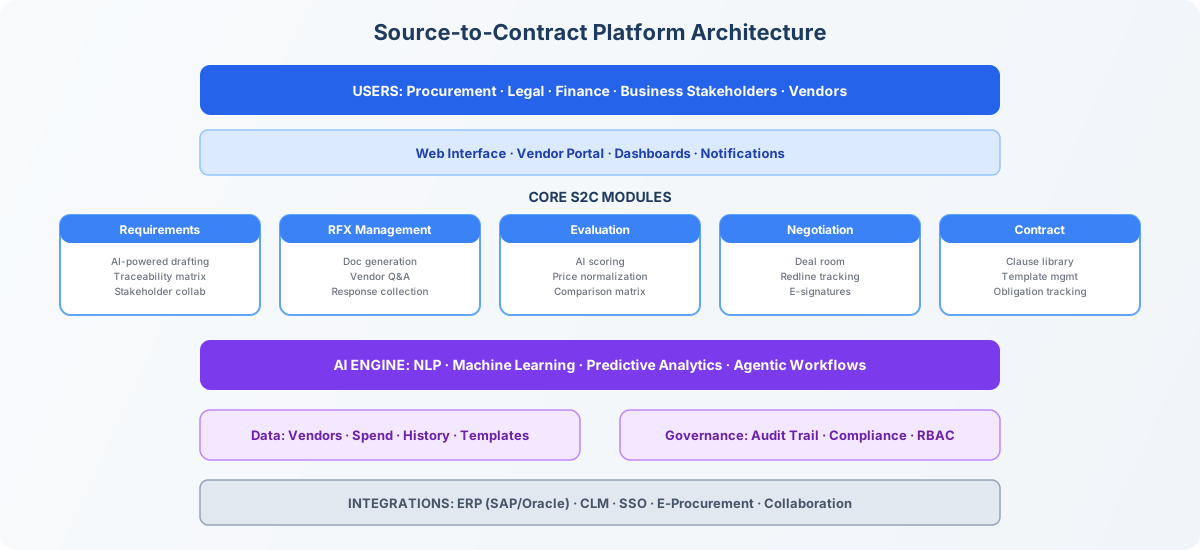
Modern S2C platforms follow a layered architecture. Users interact through web interfaces and vendor portals. Core modules handle each stage of the sourcing lifecycle. An AI engine provides intelligence across all modules, while integration and governance layers connect to enterprise systems and enforce compliance.
The S2C Lifecycle
Requirements
Define what you need
RFX
Solicit vendor responses
Evaluation
Score and compare
Negotiation
Finalize terms
Contract
Execute and manage
Why Integration Matters
The key advantage of S2C over point solutions is data flow. When requirements feed directly into RFX documents, which feed into evaluation scorecards, which feed into contract terms, you eliminate rekeying errors, reduce cycle time, and maintain a complete audit trail automatically.
Essential Features to Look For
Not all S2C platforms are created equal. When evaluating options, focus on these six capability areas that separate leading platforms from basic tools.
Requirements Management
- AI-powered requirement drafting from past RFXs
- End-to-end traceability (requirement → vendor response → score)
- Collaborative authoring with stakeholder sign-off
- Template library for repeat categories
RFX Automation
- Multi-format document generation (RFI, RFP, RFQ)
- Self-service vendor portal for response submission
- Automated Q&A management with deadline tracking
- Intelligent vendor recommendations from database
Evaluation & Scoring
- AI-powered proposal analysis and summarization
- Price normalization across different formats
- Multi-stakeholder scoring with weighted criteria
- Side-by-side comparison matrix with drill-down
Negotiation Tools
- Secure deal rooms with document sharing
- Redline tracking and version comparison
- E-auction capabilities for competitive bidding
- AI-suggested negotiation strategies
Contract Management
- AI contract authoring from approved clause library
- Obligation tracking with automated reminders
- E-signature integration (DocuSign, Adobe Sign)
- Renewal management and expiry alerts
Analytics & Reporting
- Real-time dashboards with KPI tracking
- Spend analytics and savings attribution
- Vendor performance scorecards over time
- Compliance and audit trail reports
Standardizing RFX Across Business Units
One of the biggest challenges for enterprise organizations is achieving procurement consistency across regions, departments, and subsidiaries. Without a unified platform, each business unit develops its own processes, templates, and vendor relationships, leading to duplicated effort, missed savings, and compliance gaps.
The Cost of Fragmentation
Duplicate spend
Multiple business units contract with the same vendor at different prices without knowing it
Compliance risk
Inconsistent processes make it impossible to demonstrate governance across the enterprise
Lost leverage
Decentralized buying means your organization never leverages its full purchasing power
How S2C Platforms Solve This
Centralized template library
All business units use approved RFX templates, ensuring consistent quality and compliance while allowing customization for local requirements. Templates are version-controlled and updated centrally.
Unified approval workflows
Standard approval chains with escalation rules ensure every procurement decision follows organizational governance, regardless of which team initiates it. Thresholds can vary by region while maintaining global policy.
Cross-unit vendor database
A shared vendor database with performance data from all business units enables better vendor selection and leveraged negotiations. When Unit A rates a vendor poorly, Unit B sees that data before engaging them.
Enterprise-wide analytics
Consolidated reporting across all business units provides visibility into total spend, vendor performance, cycle times, and compliance rates, enabling CPOs to identify savings opportunities and benchmark performance across the organization.
Key Insight
Organizations that standardize their RFX process across business units report 25-35% reduction in procurement costs through better leverage, eliminated redundancy, and consistent best practices. The biggest gains come from consolidated vendor negotiations.
How to Evaluate S2C Platforms
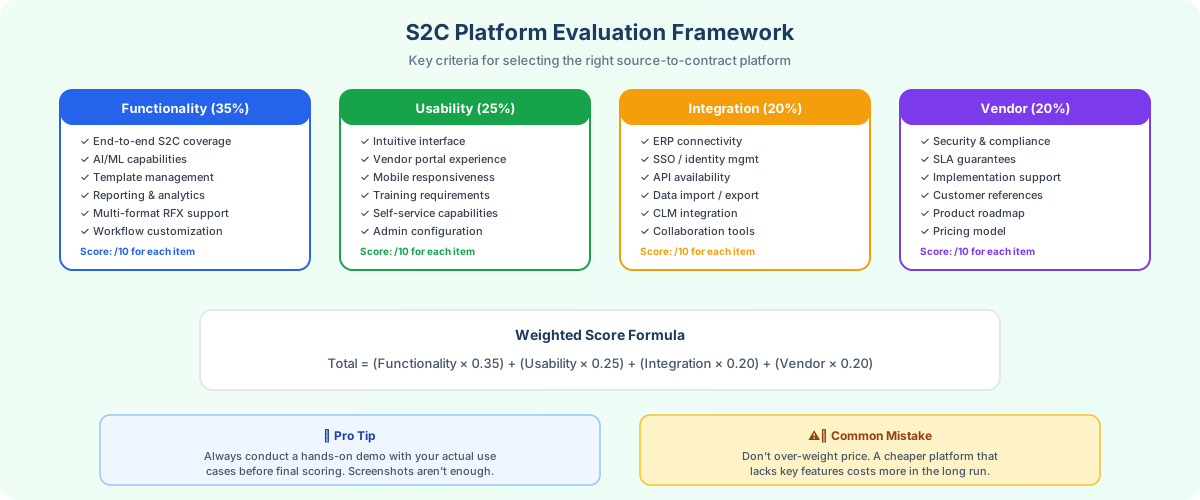
Selecting the right S2C platform is itself a procurement decision. Use a structured evaluation framework that weights criteria according to your organization's priorities. The framework below is a proven starting point used by procurement leaders.
| Criteria | Weight | What to Assess |
|---|---|---|
| Functionality | 35% | End-to-end S2C coverage, AI capabilities, template management, reporting depth, multi-format RFX, workflow customization |
| Usability | 25% | Intuitive interface, vendor portal experience, mobile access, training requirements, self-service configuration |
| Integration | 20% | ERP connectivity (SAP, Oracle), SSO/identity, API availability, data import/export, CLM integration |
| Vendor | 20% | Security & compliance (SOC 2, GDPR), SLA guarantees, implementation support, customer references, product roadmap |
Pro Tip
Always conduct a hands-on demo with your actual use cases before final scoring. Ask vendors to demonstrate a real RFX workflow using your data, not canned demos. The gap between marketing materials and actual product capability is often significant.
Source-to-Contract vs Source-to-Pay
The terms S2C and S2P are often confused. Understanding the distinction is critical for choosing the right scope of investment. S2C covers the strategic, upstream process. S2P extends that coverage through transactional fulfillment.
Source-to-Contract (S2C)
Strategic upstream process focused on getting the best deal at the best terms.
- Requirements → RFX → Evaluation → Negotiation → Contract
- Focuses on vendor selection and deal quality
- KPIs: cycle time, savings achieved, vendor quality scores
- Best for: organizations focused on strategic sourcing
Source-to-Pay (S2P)
Extends S2C through transactional fulfillment and payment.
- S2C + Purchase Orders → Receipt → Invoice → Payment
- Focuses on operational efficiency and compliance
- KPIs: PO compliance, invoice accuracy, payment terms
- Best for: full procure-to-pay automation
Which Should You Choose?
Choose S2C if your primary pain is vendor selection, RFX management, and contract quality. This is the right starting point if you already have ERP/P2P systems handling transactions.
Choose S2P if you need end-to-end coverage from sourcing through payment, or if you're replacing an aging ERP procurement module entirely.
Start with S2C, expand later. Many organizations get the most immediate ROI from S2C (strategic sourcing) and add P2P modules in a later phase once sourcing is streamlined.
Real-World Implementation Scenarios
S2C platforms serve different organizational needs. Here are four common scenarios and how the platform adapts to each.
Global Enterprise
A Fortune 500 manufacturer with procurement teams in 12 countries. Each region had its own RFX templates and vendor databases.
Result: Unified platform across all regions, centralized vendor database with 15,000+ suppliers, 40% reduction in duplicate vendor contracts, $12M annual savings from consolidated negotiations.
Mid-Market IT Company
A 2,000-person SaaS company managing 200+ software vendor contracts with no formal sourcing process.
Result: Implemented S2C for all software procurement, automated renewal tracking, reduced rogue spend by 60%, average 18% savings on vendor negotiations with competitive RFP data.
Government Agency
A federal agency requiring strict compliance with public procurement regulations, audit trails, and transparent scoring.
Result: Full audit compliance from day one, automated regulatory checklists, 50% faster RFP cycles while maintaining transparency, zero compliance findings in next audit.
Healthcare System
A hospital network standardizing medical supply procurement across 8 facilities with strict quality and compliance requirements.
Result: Standardized formulary management, AI-powered vendor quality scoring, 30% reduction in supply chain costs, consistent compliance with Joint Commission requirements.
Implementation Timeline & Common Mistakes
Typical Implementation Phases
Weeks 1-4: Configuration & Setup
Platform configuration, template creation, workflow setup, user provisioning, and integration planning.
Template library setup
User roles & permissions
Workflow configuration
Integration architecture
Weeks 5-8: Pilot & Training
Run first sourcing events with pilot team, train procurement staff, refine workflows based on real feedback.
Run 2-3 pilot RFXs
Train power users
Complete ERP integration
Refine scoring criteria
Weeks 9-16: Enterprise Rollout
Expand to all business units, migrate historical data, enable advanced AI features, establish reporting dashboards.
Roll out to all BUs
Historical data migration
Enable AI features
Executive dashboards
Common Mistakes to Avoid
Over-weighting price
Choosing the cheapest platform often costs more long-term through poor adoption, missing features, and costly customizations. Evaluate total cost of ownership including implementation, training, and ongoing support.
Big-bang rollout
Attempting to deploy across all business units simultaneously. Start with a pilot team, iterate on workflows, then expand. Organizations that skip the pilot phase see 3x higher implementation failure rates.
Ignoring change management
Technology alone doesn't transform procurement. Invest in training, executive sponsorship, and process redesign. The #1 reason S2C implementations fail is user adoption, not technology limitations.
Skipping integration planning
Treating ERP and CLM integration as an afterthought leads to data silos and manual workarounds. Map your integration requirements during vendor evaluation, not after contract signing.
Frequently Asked Questions
See Nvelop's S2C Platform in Action
Nvelop covers the full source-to-contract lifecycle with AI-powered automation at every stage, from requirements to contract execution.
Book a demoContinue Learning
S2C Process Guide
Master the source-to-contract process from start to finish.
Read guideRFX Automation Guide
Learn to automate RFP, RFQ, and RFI processes with AI.
Read guideRFX Management Features
Explore Nvelop's AI-powered RFX management capabilities.
Explore featuresTest Your Knowledge
Take a short Academy quiz on procurement and S2C platform fundamentals.
Take the quiz