
Most sourcing failures start before the RFP.Learn the steps that prevent them.
A practical guide to the end-to-end sourcing process: from intake and requirements through evaluation, award decisions, and negotiation.
Course Overview
What you'll cover in this course.
Each lesson builds on the previous. By the end you will have a working understanding of every stage in a professional sourcing process.
Sourcing is the process of finding, evaluating, and selecting suppliers for a defined business need. It begins with an intake request and requirements definition, runs a competitive event (RFI, RFP, or RFQ), evaluates and scores proposals, selects a supplier, negotiates terms, and documents the award decision. Sourcing is one structured phase within the broader procurement lifecycle.
Capture business needs accurately and define functional, non-functional, and business requirements before any sourcing event begins.
Understand the market before running a competitive event. Identify and qualify 3 to 5 suppliers who can genuinely meet your requirements.
Run fair, structured RFI, RFP, RFQ, and RFS events where every supplier receives the same information at the same time.
Score proposals against pre-defined weighted criteria. Structure removes bias and makes evaluation outcomes defensible.
Make award decisions based on scores, total cost, risk, and strategic fit. Document every decision before anyone calls a winner.
Negotiate price, contract terms, and SLAs after award. Preparation determines the outcome. Always confirm agreements in writing.
Centralize, respond to, and share supplier questions equally. One private answer to one supplier is an advantage over all others.
See how Nvelop structures sourcing requirements, events, and scoring end to end.
Book a DemoLesson 01 of 07
Intake and Requirements Definition
The sourcing process starts with intake: capturing a business need. It continues with requirements definition: clearly articulating what is needed, why, and what success looks like.
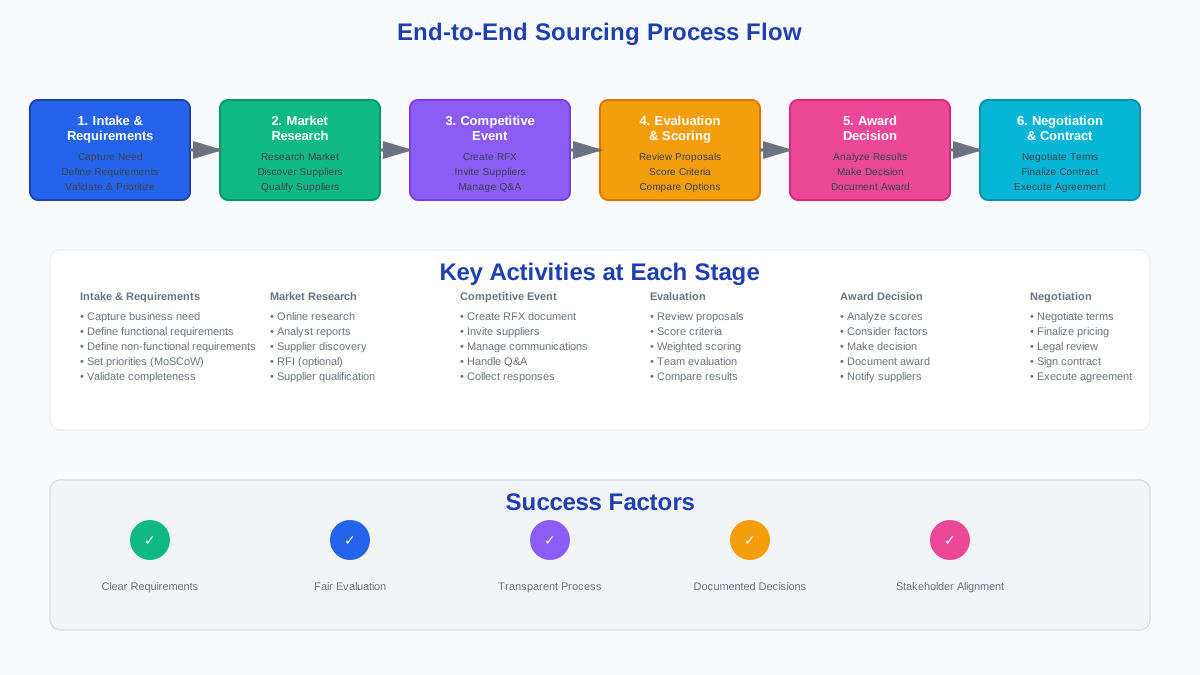
Figure 1: End-to-end sourcing process flow
Every intake should answer these questions before sourcing begins
Types of Requirements
Functional Requirements
What the solution must do. Features, capabilities, and behaviors.
Example: “System must support 10,000 concurrent users.”
Non-Functional Requirements
How the solution must perform. Security, availability, and scalability.
Example: “System must be SOC 2 Type II certified.”
Business Requirements
Why you need it. Objectives, success criteria, and expected outcomes.
Example: “Reduce customer response time by 50%.”
Requirements Best Practices
Be specific: Avoid vague terms like user-friendly or fast. Define measurable criteria.
Prioritize: Distinguish must-haves from nice-to-haves using the MoSCoW method (Must / Should / Could / Won't).
Collaborate: Involve stakeholders early. Requirements should reflect business needs, not just procurement preferences.
Validate: Review for completeness, clarity, and feasibility before creating an RFX.
Document: Capture requirements in a structured format using templates and checklists.
Common mistake
Starting with a solution preference instead of a requirement. “We need Salesforce” is a solution. “We need a CRM that integrates with our ERP and supports 500 users” is a requirement. Starting with requirements leads to better supplier selection.
Requirements in Nvelop: Nvelop's requirements module captures stakeholder inputs, flags gaps, and generates structured requirement sets that feed directly into RFP creation. Explore Requirements Management →
Lesson 02 of 07
Market Research and Supplier Discovery
Before running a competitive event, understand the market. Research suppliers, capabilities, and pricing models. This informs your sourcing strategy and surfaces suppliers you may not know exist.
Why market research matters
Market Research Methods
Online Research
Search engines, industry publications, analyst reports (Gartner, Forrester), supplier websites, and software review platforms.
Best for: Initial market understanding, identifying major players, and understanding pricing models.
Request for Information (RFI)
Send an RFI to multiple suppliers to gather structured information about capabilities, solutions, and market approaches.
Best for: Exploring new markets, understanding supplier capabilities, and narrowing down the supplier list before issuing an RFP.
Industry Networks and Peers
Talk to peers, join industry groups, attend conferences, and leverage professional networks for first-hand supplier experiences.
Best for: Real-world experiences, common challenges, and trusted supplier recommendations.
Supplier Discovery
Supplier discovery is about finding qualified suppliers who can meet your requirements. Do not limit the search to suppliers you already know. When evaluating candidates, consider:
Pro tip: Aim for 3 to 5 qualified suppliers in a competitive event. Too few reduces competition. Too many creates evaluation burden and may discourage strong suppliers from investing time in a response.
Lesson 03 of 07
Competitive Events and Supplier Communications
Competitive sourcing events (RFI, RFP, RFQ, RFS) are structured processes for engaging suppliers. Every supplier must receive the same information and have the same opportunity to respond.
Planning the Event
Timeline
Define response deadline, Q&A period, evaluation window, and award target date before launching.
Supplier list
Decide who to invite, how many, and what qualification criteria they must meet.
Evaluation approach
Set criteria, weights, evaluators, and scoring method before proposals arrive.
Communication plan
Define how information will be shared, how Q&A will be managed, and how updates are communicated.
Supplier Communication Best Practices
Be clear and concise: Use plain language. Avoid jargon unless absolutely necessary.
Set expectations: Clearly state deadlines, evaluation criteria, and what happens next at every stage.
Be responsive: Answer supplier questions promptly. Delays frustrate suppliers and delay responses.
Be transparent: Share Q&A responses with all suppliers, unless the information is genuinely confidential.
Use a single channel: Centralize all communications to avoid confusion and create an auditable record.
Typical sourcing event timeline
Launch
Week 1Send RFX and brief all suppliers simultaneously.
Q&A
Weeks 2–3Open Q&A period. Share all responses with every participant.
Evaluation
Weeks 5–6Score submissions against pre-defined criteria.
Award
Weeks 7–8Notify all suppliers. Begin contract negotiation.
Common mistake
Sharing different information with different suppliers. This creates unfair competition and can lead to protests or legal issues. Treat all suppliers equally throughout the entire event.
Running RFX events in Nvelop: Nvelop's tendering module manages supplier communications, Q&A logs, document distribution, and response collection - all in one auditable workspace. Explore Tendering & Supplier Discovery →
See how Nvelop plans and tracks sourcing events from intake to award.
See Project PlanningLesson 04 of 07
Evaluation and Scoring Basics
Evaluation is the process of assessing supplier proposals against your requirements. Scoring provides a structured, objective way to compare proposals and make defensible decisions.
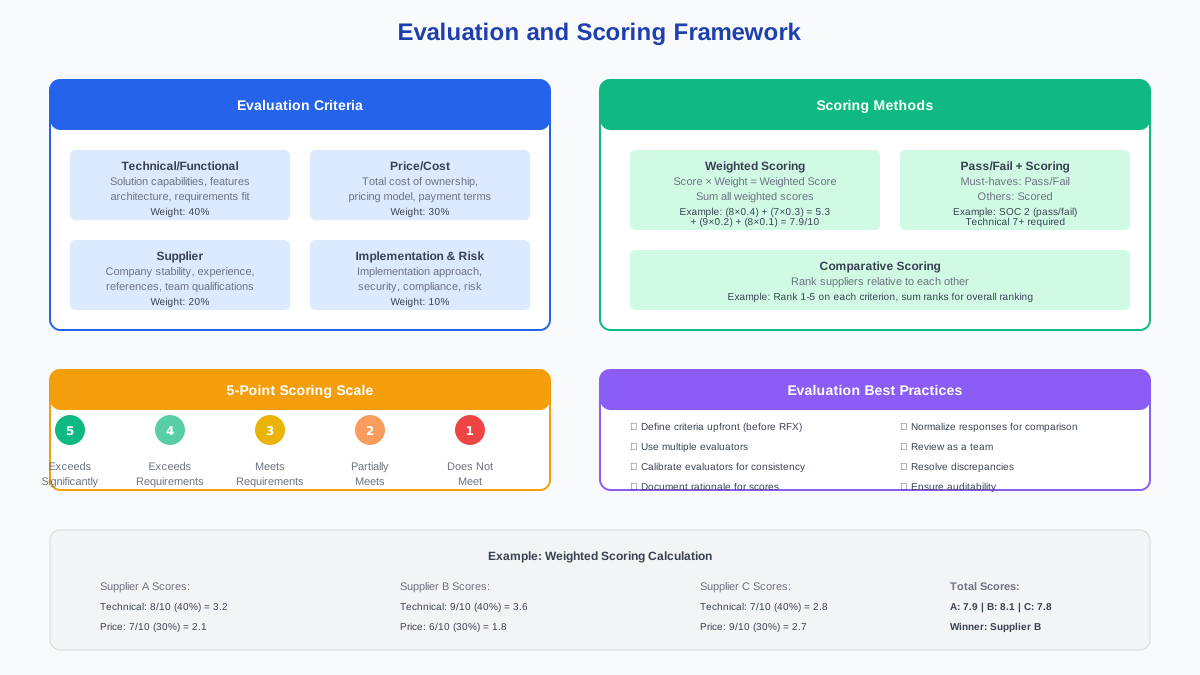
Figure 3: Evaluation and scoring framework
Common Evaluation Criteria
Technical / Functional
Does the solution meet requirements? Capabilities, features, architecture.
Price / Cost
Total cost of ownership, pricing model, and payment terms.
Supplier Profile
Company stability, experience, references, and team qualifications.
Implementation
Approach, timeline, resources, and change management support.
Support and Service
Support model, SLAs, training, and ongoing service quality.
Risk
Security, compliance, financial stability, and contract terms.
Scoring Methods
Weighted Scoring
Assign weights to criteria by importance. Score each criterion, multiply by weight, and sum for a total score.
Example: Technical 40%, Price 30%, Supplier 20%, Implementation 10%. Supplier A scores (8×0.4) + (7×0.3) + (9×0.2) + (8×0.1) = 7.9/10.
Pass/Fail with Scoring
Some criteria are pass/fail (must-haves). Others are scored. Suppliers must pass all must-haves before being scored on remaining criteria.
Example: Must be SOC 2 certified (pass/fail). Must score 7+ on technical capabilities. Then scored on all other criteria.
Comparative Scoring
Compare suppliers directly against each other rather than against absolute scores. Rank suppliers on each criterion.
Example: Rank suppliers 1 to 5 on each criterion separately, then sum all ranks for an overall comparative ranking.
Common mistake
Scoring based on gut feel without clear criteria. This leads to inconsistent evaluation, bias, and difficulty defending decisions to stakeholders or auditors. Always define criteria and document rationale for every score.
Evaluation in Nvelop: Nvelop scores vendor proposals against your weighted criteria automatically, with traceable AI rationale for each score and side-by-side comparison across all submissions. Explore Proposal Evaluation →
Lesson 05 of 07
Award Decision Making
The award decision is the culmination of the sourcing process. It should be grounded in evaluation results, aligned with business objectives, and documented thoroughly before any supplier is notified.
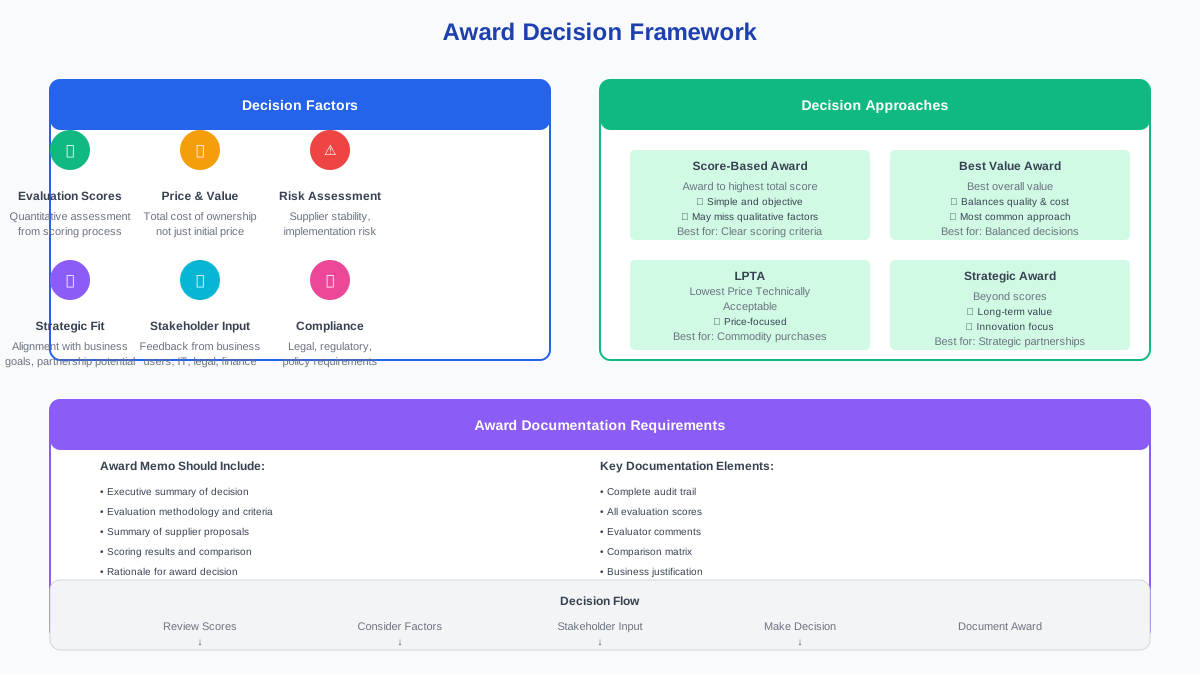
Figure 4: Award decision framework
Factors in Award Decisions
Evaluation scores: The quantitative outcome of structured scoring against defined criteria.
Total cost of ownership: Full cost over the contract period, not just the initial or headline price.
Risk assessment: Supplier financial stability, implementation risk, and compliance exposure.
Strategic fit: Alignment with business goals and long-term partnership potential.
Stakeholder input: Feedback from business users, IT, legal, and finance on their assessment.
Decision-Making Approaches
Score-Based: Award to the highest-scoring supplier. Simple and objective.
Best Value: Balance total score with total cost of ownership, not just headline price.
LPTA: Lowest price among all suppliers who pass every technical requirement.
Strategic: Beyond scores: partnership potential, innovation, or market position.
Your award memo should cover
Common mistake
Making award decisions without proper documentation. When auditors or stakeholders ask “why this supplier?” you need clear, documented rationale. Spreadsheets and email threads do not provide adequate auditability.
Lesson 06 of 07
Negotiation Fundamentals
Negotiation happens after award, before contract execution. It is about reaching agreement on terms, pricing, and conditions that both parties can execute on. Preparation determines the outcome.
What to Negotiate
Price and payment terms
Final pricing, discounts, payment schedule, and currency.
Contract terms
Duration, renewal options, termination clauses, and liability.
Service levels (SLAs)
Performance metrics, response times, penalties, and credits.
Scope and deliverables
What is included, what is excluded, and how changes are managed.
Implementation
Timeline, resources, milestones, and acceptance criteria.
Support and maintenance
Support model, response times, software updates, and training.
Legal and compliance
Data protection, security requirements, IP rights, and warranties.
Negotiation Strategies
Collaborative
Work together to find win-win solutions. Focus on mutual value creation. Best for long-term partnerships where the relationship matters beyond the current deal.
Competitive
Maximize your position using leverage, deadlines, and alternatives. Best for one-time transactions or when you have strong competitive alternatives.
Value-Based
Focus on total value, not just price. Trade volume for discounts, longer terms for better rates, or references for concessions on scope.
Before entering any negotiation
Common mistake
Agreeing to terms verbally and assuming they will appear in the contract. Always confirm agreements in writing. “What we agreed” and “what is in the contract” can differ significantly.
Pro tip: Find what is valuable to the supplier that costs you little, and what is valuable to you that costs them little. A case study or reference may be highly valuable to a supplier but cost you nothing to provide. These asymmetric trade-offs are the best concessions.
Lesson 07 of 07
Supplier Q&A Management
During competitive events, suppliers will have questions. Managing Q&A effectively ensures all suppliers can respond accurately and fairly, while maintaining transparency and an auditable record.
Q&A Best Practices
Set a Q&A deadline: Allow time for questions but close Q&A before the response deadline. Late answers are unfair to suppliers who submitted early.
Centralize Q&A: Use a single channel (platform, portal, or designated email) to track every question and answer.
Respond promptly: Aim for 24 to 48 hour response time. Delays frustrate suppliers and may delay their submissions.
Share with all suppliers: Unless the question is genuinely confidential, share every Q&A response with all participants simultaneously.
Categorize questions: Group similar questions, identify common concerns, and update the RFX if a clarification changes the scope.
Document everything: Maintain a full Q&A log for auditability. It is your record of what suppliers were told and when.
Handling Different Question Types
Clarification Questions
The most common type. Answer directly and share with all suppliers.
“What does scalable mean in this context?”
Scope Questions
Clarify what is included or excluded. Update the RFX if the clarification changes scope.
“Is training included in the implementation fee?”
Technical Questions
Route to technical experts. Provide detailed, precise answers.
“What integration methods are supported?”
Confidential Questions
Handle privately. Answer individually if appropriate, or decline if the information is too sensitive to share.
“What is your current annual spend in this category?”
Common mistake
Answering supplier questions via email or phone without documenting or sharing the response with all participants. This creates unfair competitive advantages and audit risks. All Q&A must be centralized and shared equally.
Pro tip: Modern sourcing platforms can automatically answer common questions based on RFX content, then route edge cases to human reviewers. This reduces manual effort while ensuring consistent, accurate responses across all suppliers.
FAQ
Frequently asked questions.
Common questions about sourcing processes, supplier management, and evaluation practices.
Test Your Knowledge
Sourcing Fundamentals Quiz
Ready to test what you have learned? Take the quiz to assess your knowledge of sourcing processes, supplier evaluation, and best practices across all seven lessons.
Keep learning
Related Courses
Nvelop Sourcing Platform
See the full sourcing workflow in Nvelop: requirements, RFP generation, vendor scoring, and compliance - end to end.
Source-to-Pay (S2P)
How S2P extends sourcing to cover purchase orders, invoicing, three-way match, and supplier payment.
Source-to-Contract (S2C)
The full upstream procurement process from requirements through contract execution.
RFX Explained
What RFI, RFP, RFQ, and RFS are, and when to use each type of procurement document.
Using Nvelop (Platform Walkthrough)
9-module step-by-step walkthrough of the full sourcing lifecycle inside Nvelop - from project setup through to close.
Course complete.
You have covered the full sourcing process from intake to award. Ready to go deeper?