

CLM implementation doesn't have tobe a multi-year project.
How to plan, deploy, and optimize a contract lifecycle management system, from business case through post-launch.
Lesson 01
What Is CLM and Why Implement It?
Contract lifecycle management covers the full life of a contract: authoring, negotiation, execution, compliance monitoring, and renewal or termination. Without CLM, contracts end up scattered across shared drives, missed renewals go untracked, and compliance monitoring stays manual.
Contract lifecycle management (CLM) implementation is the process of planning, configuring, deploying, and optimizing a CLM system to manage contracts from creation through execution, compliance monitoring, and renewal. This guide covers best practices for implementing CLM systems successfully and distills them into a practical, actionable format.
50–70%
Faster Cycles
Contract creation to execution
20–30%
Risk Reduction
Contract-related risk
10–15%
Compliance Lift
Obligation tracking
6–12 mo
Payback Period
Typical ROI timeline
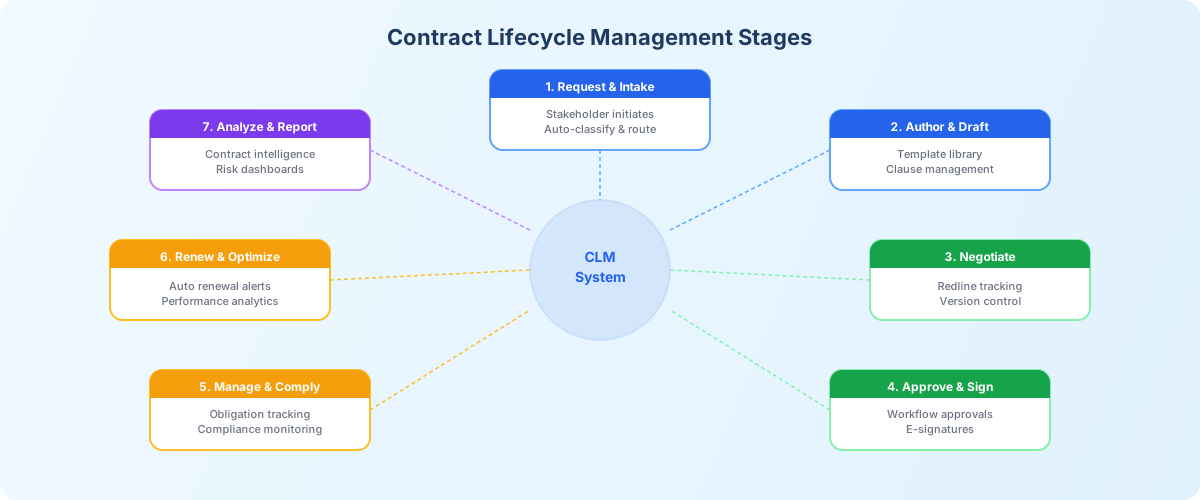
Figure 1: The seven stages of contract lifecycle management that a CLM system automates.
Lesson 02
Pre-Implementation: Building the Business Case
A strong business case is the foundation of successful CLM implementation. Document current friction points, quantify costs, and define success criteria before evaluating vendors.
Audit your current contract state
How many active contracts do you manage? Where are they stored? How long does it take to find a specific contract? What percentage of renewals are missed?
Quantify the cost of manual contract management
Calculate time spent on contract drafting, legal review cycles, approval delays, manual compliance tracking, and the revenue impact of missed renewals or auto-renewals at unfavorable terms.
Define requirements and success criteria
What must the CLM system do? Who will use it? What integrations are required? Define measurable KPIs: cycle time reduction, compliance rate, renewal capture rate, and user adoption targets.
Lesson 03
Selecting the Right CLM Platform
Choosing a CLM platform is a long-term commitment. Evaluate vendors across these four critical dimensions before signing.
Authoring & Templates
Clause libraries, template management, version control, collaborative editing, AI-assisted drafting, and standard playbook support.
Workflow Automation
Approval routing, negotiation tracking, redline management, e-signature integration, and milestone-based alerts.
AI Capabilities
Clause extraction, risk identification, obligation detection, renewal prediction, and intelligent search across contract repositories.
Compliance & Reporting
Obligation tracking, compliance dashboards, audit trail, renewal management, and analytics for contract performance and risk.
Lesson 04
Configuration and Data Migration
Data migration is typically the most complex phase of CLM implementation. Contracts scattered across shared drives, email, and legacy systems need to be organized, cleaned, and imported.
Inventory and Classify
Locate all existing contracts. Classify by type (vendor, customer, NDA, MSA), status (active, expired, pending), and priority. Focus migration on active contracts first.
Extract Key Metadata
For each contract, extract critical metadata: parties, effective dates, expiration dates, renewal terms, key obligations, and financial terms. AI-powered extraction tools can accelerate this significantly.
Configure Templates and Workflows
Set up contract templates, clause libraries, approval workflows, and notification rules. Align these with your legal playbook and procurement policies.
Import and Validate
Import contracts and metadata into the CLM system. Validate completeness and accuracy with spot checks. Set up automated alerts for upcoming renewals and expirations.
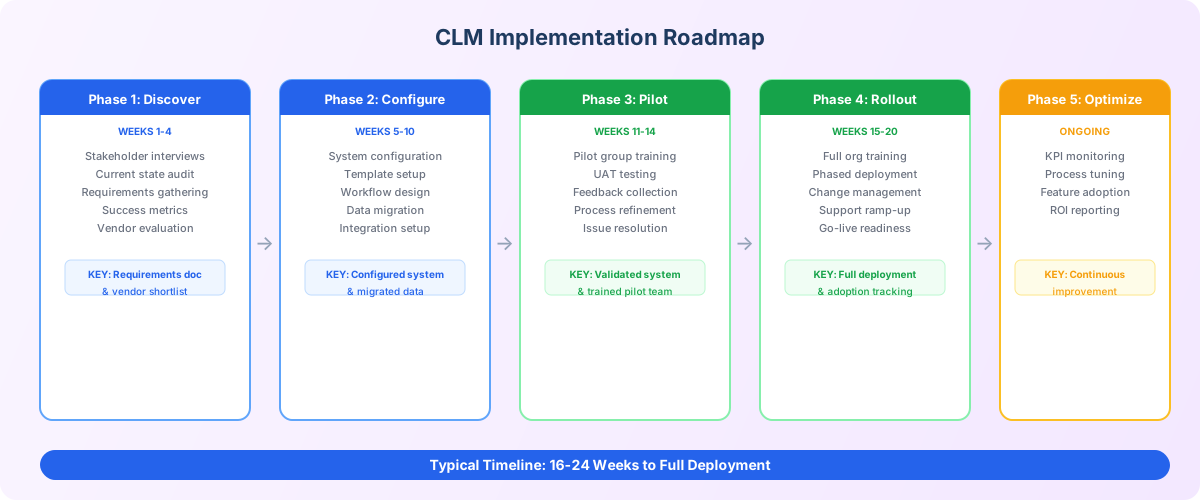
Figure 2: A typical CLM implementation follows five phases over 16–24 weeks.
Lesson 05
Rollout Strategy and Change Management
Technology is only half the implementation. Change management determines whether users adopt the CLM system or revert to old habits.
Phased Rollout
- Start with one contract type or department
- Gather feedback and iterate on configuration
- Expand to additional contract types
- Roll out to all departments and users
Change Management
- Executive sponsorship and visible support
- Role-specific training (legal, procurement, business)
- Champions in each department for peer support
- Regular feedback sessions and quick fixes
The 80/20 rule of CLM adoption
80% of CLM implementation success comes from change management, not technology. The best CLM system will underdeliver if legal teams continue drafting in Word and storing contracts in email. Invest disproportionately in training, incentives, and making the new system easier than the old way.
Lesson 06
Integration with Sourcing and Procurement Systems
CLM delivers maximum value when integrated with your sourcing and procurement systems. The contract should flow directly from the sourcing award without manual re-entry.
Sourcing → CLM
Awarded vendor data and negotiated terms flow automatically into contract templates. No re-keying of pricing, scope, or vendor details.
CLM → ERP
Executed contracts push approved vendor data, pricing, and terms into your ERP for purchasing, invoicing, and supplier management.
CLM → Analytics
Contract data feeds spend analytics, compliance reporting, and supplier performance dashboards for data-driven procurement decisions.
Lesson 07
Post-Implementation Optimization and KPIs
CLM implementation is the beginning of continuous improvement. Track these KPIs to measure progress and identify where to optimize next.
Process KPIs
- 01Average contract cycle time (creation to execution)
- 02Number of review cycles per contract
- 03Approval turnaround time
- 04Template utilization rate
Business KPIs
- 01Renewal capture rate (% of renewals managed proactively)
- 02Compliance score (% of contracts fully compliant)
- 03Revenue leakage prevented
- 04User adoption rate across departments
Common CLM Implementation Mistakes
- Trying to migrate all legacy contracts at once instead of phasing by priority
- Over-customizing workflows before understanding actual usage patterns
- Neglecting training, especially for legal teams who draft most contracts
- Not integrating with sourcing systems, which creates a data silo
FAQ
Frequently asked questions.
Common questions about CLM implementation timelines, platform selection, and integration.
Keep learning
Related Courses
Contract Management
Fundamentals of contract management for legal and procurement teams.
Source to Contract
The complete source-to-contract lifecycle: how sourcing flows into contract execution.
Enterprise Integration
How procurement systems connect: sourcing, CLM, ERP, and analytics.
Streamline your source-to-contract lifecycle.
Nvelop connects sourcing directly to contract management, so awarded vendors flow seamlessly into contract execution, with no manual re-entry.