
Signed is just the beginning.Eight lessons from drafting to renewal.
Eight lessons: CLM stages, contract types, negotiation, key terms, compliance, renewal, and redlining.
Course Overview
What you will learn.
Contract management is the process of creating, negotiating, executing, monitoring, and renewing contracts to maximize value, ensure compliance, and mitigate risk across the full contract lifecycle.
Contract Lifecycle Management
CLM stages
Best practices
CLM systems
Contract Types
MSA, SOW, SLA
Purchase agreements
NDA
Negotiation Strategies
Preparation
Approaches
Tactics
Key Contract Terms
Pricing terms
Liability and IP
Termination
Contract Renewal
Renewal process
Renewal strategies
Timing
Contract Compliance
Compliance monitoring
Obligations
Remedies
Redlining and Version Control
Redlining practices
Version control
Change logs
Best Practices
Process
Technology
Relationship management
See how Nvelop manages the full contract lifecycle, from drafting to renewal.
Book a DemoLesson 01 of 08
Contract Lifecycle Management
Contract Lifecycle Management (CLM) is the end-to-end process of managing contracts from creation through execution, monitoring, renewal, and termination. Effective CLM ensures contracts deliver value and protect the organization.
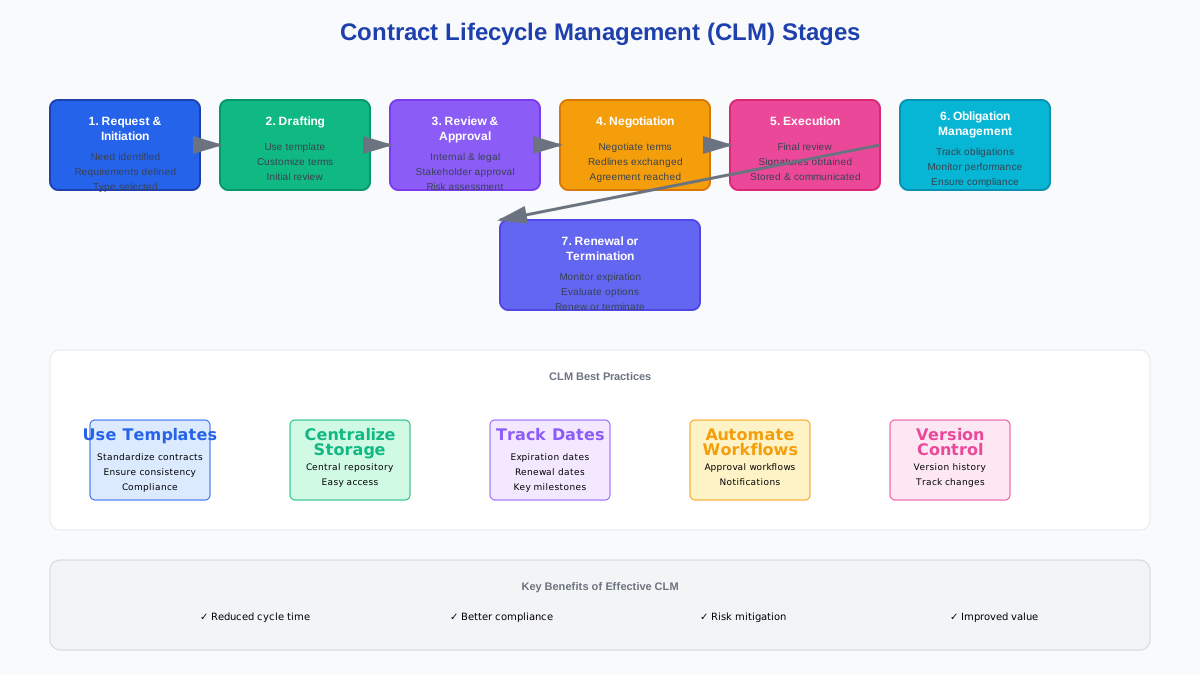
Figure 1: Contract lifecycle management stages
The Seven CLM Stages
Request to renewal or termination
Request
Need identified, requirements defined, contract type selected, template chosen
Drafting
Contract drafted, terms customized, business requirements added, initial review
Review
Internal review, legal review, stakeholder approval, compliance check
Negotiation
Terms negotiated with supplier, redlines exchanged, revisions made, agreement reached
Execution
Final review, signatures obtained, stored in system, communicated to stakeholders
Obligations
Track obligations, monitor performance, manage deliverables, ensure compliance
Renewal / Exit
Monitor expiration dates, evaluate renewal, renegotiate or execute termination
CLM Best Practices
Use templates
Standardize contracts with approved templates to ensure consistency and reduce drafting time.
Centralize storage
Store all contracts in a central repository with search, retrieval, and access controls.
Track key dates
Monitor expiration dates, renewal windows, and key contractual milestones proactively.
Automate workflows
Use CLM systems to automate approval workflows, notifications, and reminders.
Version control
Maintain clear version history and track all changes throughout the negotiation process.
Regular reviews
Periodically review active contracts for compliance, performance, and optimization opportunities.
Pro tip: The biggest CLM failures happen at Stage 6. Contracts get signed and then forgotten. Build a systematic obligation tracking process: assign owners to every key obligation and review compliance quarterly, not just at renewal.
Lesson 02 of 08
Contract Types
Different contract types serve different purposes. Using the right type ensures you have the appropriate legal framework, risk allocation, and scope definition for each engagement.
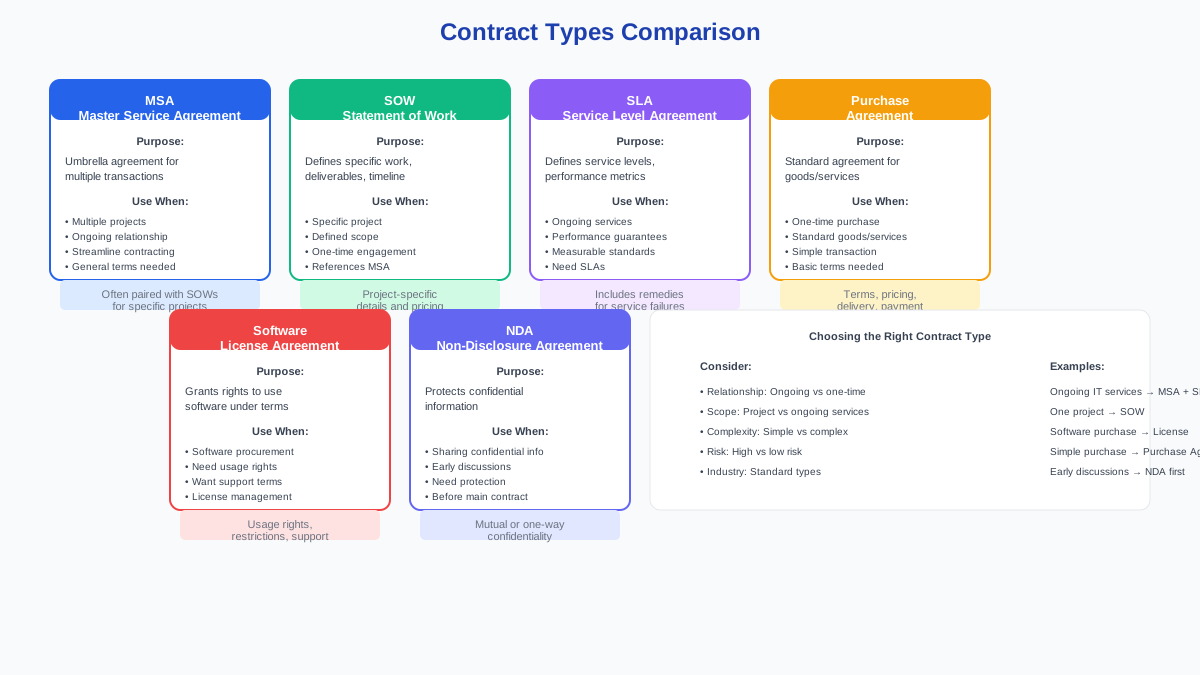
Figure 2: Contract types and when to use each
Common Contract Types
Master Service Agreement (MSA)
Ongoing supplier relationship
Umbrella agreement establishing general terms for multiple transactions. Individual SOWs reference the MSA.
Statement of Work (SOW)
Specific project engagement
Defines the scope, deliverables, timeline, and pricing for a specific project or service engagement.
Service Level Agreement (SLA)
Ongoing services with KPIs
Defines service standards, performance metrics, measurement methods, and remedies for service failures.
Purchase Agreement (PA)
One-time goods or services
Standard agreement for a specific purchase. Includes terms, pricing, delivery, and payment conditions.
Software License Agreement (SLA)
Software procurement
Grants rights to use software under defined terms. Covers usage rights, restrictions, and support obligations.
Non-Disclosure Agreement (NDA)
Sharing confidential information
Protects confidential information shared between parties during discussions or engagements. Can be mutual or one-way.
Pro tip: For strategic suppliers, start with an MSA that covers the general relationship, then create individual SOWs for each engagement. This streamlines future contracting: you negotiate core terms once rather than re-negotiating them for every project.
Lesson 03 of 08
Negotiation Strategies
Effective negotiation protects your interests while creating value for both parties. Preparation, strategy selection, and relationship management are what separate average outcomes from strong ones.
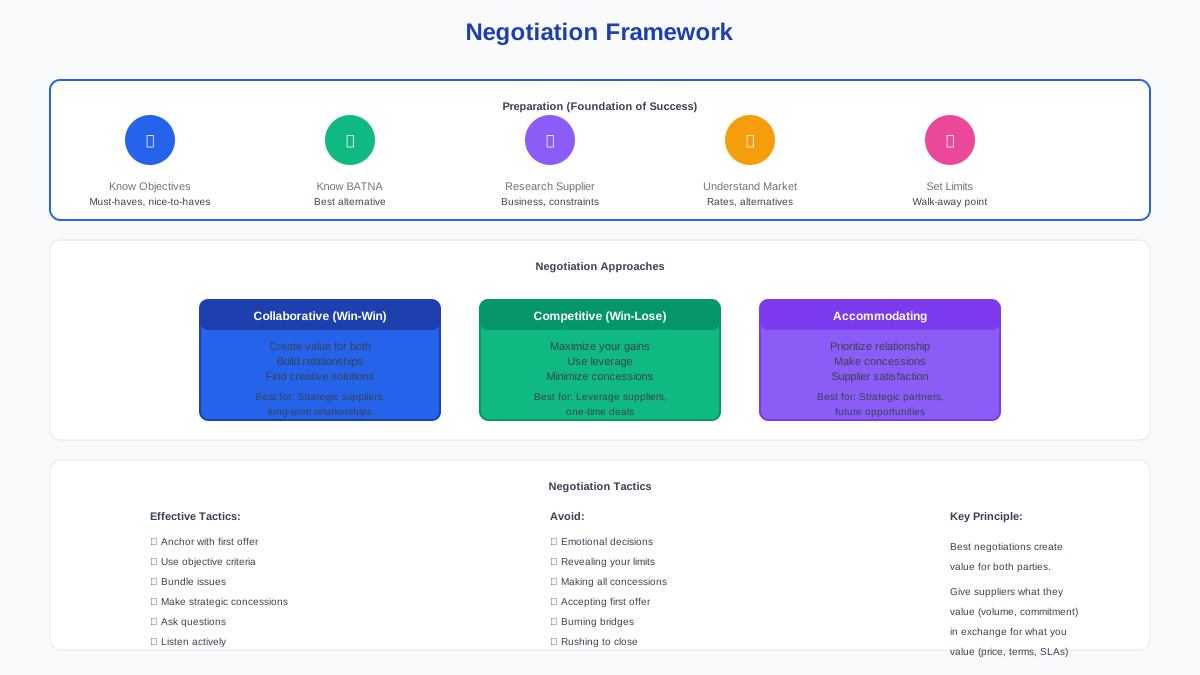
Figure 3: Negotiation framework and approaches
Preparation
Define your objectives
Identify must-haves, nice-to-haves, and deal-breakers before entering any discussion.
Know your BATNA
Establish your Best Alternative to Negotiated Agreement: your walk-away position.
Research the supplier
Understand their business, constraints, key objectives, and available alternatives.
Understand the market
Know current market rates, competitive alternatives, and industry benchmarks.
Prepare your arguments
Develop data and reasoning to support each of your positions clearly.
Set internal limits
Define approval thresholds and maximum concessions before negotiations begin.
Negotiation Approaches
Collaborative
Win-win
Focus on creating value for both parties. Build relationships, find creative solutions, and expand what is possible.
Best for: Strategic suppliers, long-term partnerships, complex deals.
Competitive
Win-lose
Focus on maximizing your gains. Use leverage, make demands, minimize concessions.
Best for: Leverage suppliers, one-time deals, price-focused negotiations.
Principled
Interest-based
Separate people from problems. Focus on interests, not positions. Use objective criteria to reach fair agreements.
Best for: Complex negotiations, multi-issue deals, situations requiring trust.
Accommodating
Relationship-first
Prioritize relationship over terms. Make strategic concessions to preserve the supplier relationship.
Best for: Strategic partners where long-term relationship outweighs short-term terms.
Effective Tactics vs. What to Avoid
Effective tactics
Anchor with a well-researched first offer
Use objective criteria and market data
Bundle issues to create trading opportunities
Make strategic concessions on low-value items
Ask open-ended questions to understand interests
Listen actively before responding
What to avoid
Making decisions based on emotion
Revealing your BATNA or walk-away point
Accepting the first offer without exploring
Conceding everything to close quickly
Burning bridges over short-term gains
Rushing to close without full agreement
Pro tip: The best negotiations create value for both parties. Look for ways to give suppliers what they value (volume commitments, longer term, early payment) in exchange for what you value (price, terms, service levels).
Lesson 04 of 08
Key Contract Terms and Conditions
Understanding the key clauses in a contract helps you negotiate better agreements and protect your organization. These terms define rights, obligations, and remedies.
Pricing Terms
Fixed price: Set price with no variation. Predictable cost, supplier bears delivery risk.
Time and materials: Pay based on time and materials consumed. Flexible but less cost certainty.
Cost plus: Actual costs plus agreed margin. Transparent but requires cost visibility.
Volume discounts: Price reductions based on purchase volume commitments.
Price adjustments: Mechanisms for price changes tied to inflation indexes or market rates.
Liability and Indemnification
Limitation of liability: Caps on total financial liability, typically tied to contract value.
Indemnification: Protection from third-party claims. Can be one-way or mutual.
Consequential damages: Often excluded (lost profits, business interruption) from liability.
Insurance requirements: Minimum coverage levels the supplier must maintain throughout the term.
Intellectual Property
Background IP: IP owned before the contract. Typically stays with the original owner.
Foreground IP: IP created during the contract. Ownership must be explicitly agreed.
Licenses: Rights to use IP. Define scope: exclusive, non-exclusive, perpetual, or term-limited.
Work for hire: Work created under contract is owned by the buyer. Common in services.
Termination and Renewal
Contract term: Duration: fixed term, evergreen (auto-renews), or milestone-based.
Termination for cause: Right to terminate for material breach or default by the other party.
Termination for convenience: Right to exit without cause, typically with advance notice.
Survival clauses: Terms that survive termination: confidentiality, IP, liability.
Common mistake: Focusing only on price and ignoring other terms. Liability caps, IP ownership, and termination rights can have significant business impact. Always review all contract terms with legal before signing.
Negotiate and redline contracts with suppliers in one shared workspace.
See the Deal RoomLesson 05 of 08
Contract Renewal Management
Contract renewal is an opportunity to improve terms, optimize costs, and strengthen relationships. Proactive renewal management prevents auto-renewals on unfavorable terms.
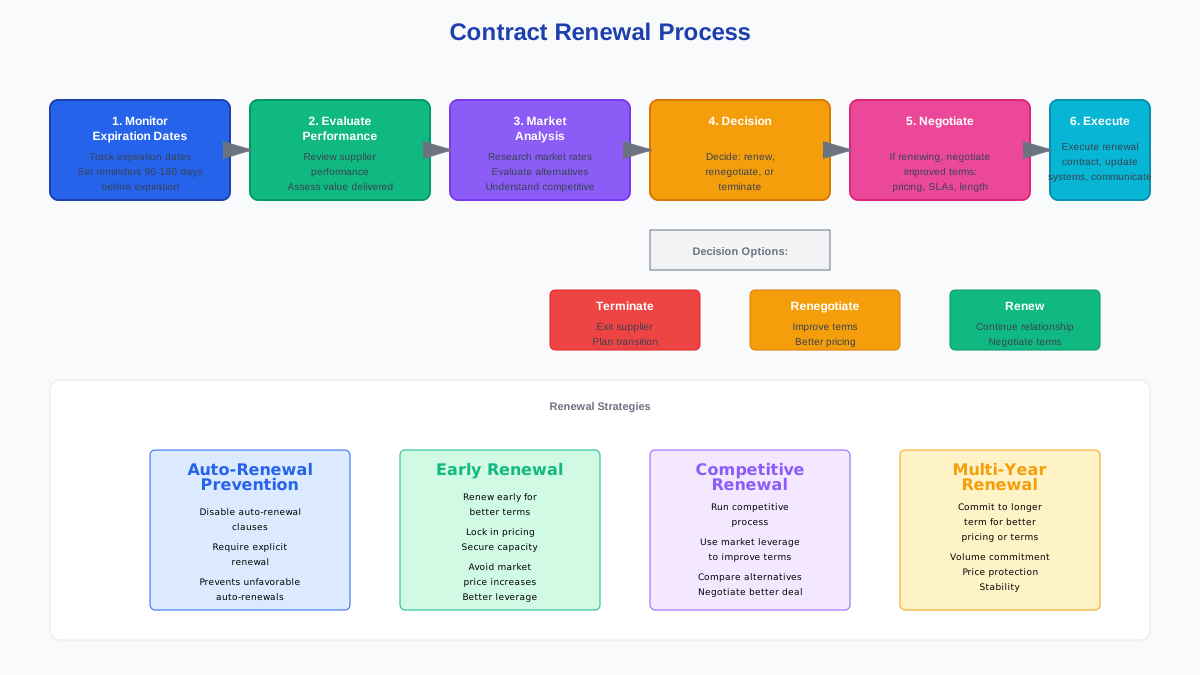
Figure 4: Contract renewal process flow
The Renewal Process
90 to 180 days before expiration
Track dates
Set renewal reminders 90 to 180 days before expiration based on contract complexity
Evaluate
Review supplier performance, assess value delivered, identify improvement areas
Market analysis
Research current market rates, evaluate alternatives, assess competitive landscape
Decide
Renew, renegotiate, run a competitive event, or terminate. Document the rationale
Negotiate
Negotiate improved terms: pricing, SLAs, contract length, new requirements
Execute
Execute renewal, update systems, notify stakeholders, or plan transition if exiting
Renewal Strategies
Disable auto-renewal
Remove auto-renewal clauses, require explicit renewal decisions each cycle.
Renew early
Lock in favorable pricing early, before market rates increase or capacity tightens.
Run a competitive event
Use the renewal to invite competitive bids, even if you plan to stay with the current supplier.
Commit to longer term
Offer a multi-year commitment in exchange for better pricing or improved service terms.
Update requirements
Use renewal to add new requirements, improve SLAs, and remove obsolete terms.
Bundle contracts
Consolidate multiple expiring contracts with the same supplier to negotiate better overall terms.
Pro tip: Renewal leverage disappears the closer you get to expiration. Suppliers know that switching costs and urgency reduce your alternatives. Start the process early and be prepared to walk away, even if you probably will not.
Lesson 06 of 08
Contract Compliance and Monitoring
Contract compliance ensures both parties meet their obligations. Proactive monitoring protects your interests and identifies issues before they become breaches.
Four Compliance Areas
Performance
Monitor service levels, quality, and delivery against contract requirements.
Tools: Scorecards, dashboards, performance reports.
Financial
Verify pricing accuracy, invoicing, payment terms, discounts, and rebates.
Tools: Invoice audits, spend analysis, financial reports.
Regulatory
Ensure certifications, licenses, and insurance are current and meet contract requirements.
Tools: Compliance audits, certification tracking.
Operational
Monitor reporting, data handling, access, and security obligations.
Tools: Operational reviews, security audits, access reviews.
Compliance Management Process
Define obligations: Document all obligations from the contract: both yours and the supplier's.
Set monitoring schedule: Define review frequency for each obligation type: monthly, quarterly, or annually.
Collect data: Gather performance data, invoices, reports, and compliance certifications.
Assess compliance: Compare actual performance to contract requirements and document findings.
Remediate issues: Address non-compliance: discussions, corrective action plans, or formal notices.
Document everything: Maintain compliance records for audits, disputes, and future contract negotiations.
Pro tip: When a supplier is not complying, start with an informal conversation before escalating to formal notices. Most issues are resolved faster and relationships preserved better when you address them as operational problems rather than legal ones.
Lesson 07 of 08
Redlining and Version Control
Redlining marks proposed changes in contract documents. Version control ensures everyone is working from the correct draft and that the full negotiation history is preserved.
Redlining Best Practices
Use track changes: Always enable track changes so every addition, deletion, and modification is visible and attributable.
Add explanatory comments: Explain why each change is needed, not just what was changed. Context speeds resolution.
Respond to all redlines: Accept, reject, or counter every supplier redline. Silence creates ambiguity.
Maintain one working copy: Never have two parties editing separate copies simultaneously. Designate who controls each round.
Clean the final version: Accept all changes and produce a clean, untracked version before sending for signature.
Archive all drafts: Retain all redlined versions for legal reference and to understand what was considered and rejected.
Version Control
Version naming
Use consistent naming: v1.0, v1.1, v2.0 or date-stamped versions (2026-06-04). Never save as 'final_final'.
Central storage
Store all drafts in one location. Use a CLM system or document management platform, not email attachments.
Change log
Maintain a log documenting what changed between versions, who made changes, and the date.
Access control
Restrict editing rights. Define who can modify the contract and prevent unauthorized changes.
Pro tip: CLM systems with built-in redlining and version control eliminate most version confusion. They automatically track changes, maintain version history, and show exactly what each party proposed and accepted.
Lesson 08 of 08
Contract Management Best Practices
Effective contract management requires consistent processes, the right tools, and disciplined follow-through. These practices reduce risk, save time, and protect value across your entire contract portfolio.
Process
- Use standard templates and approved clause libraries
- Automate approval workflows and renewal notifications
- Centralize all contracts in a searchable repository
- Document all decisions, changes, and communications
- Review contracts regularly for performance and value
- Train all stakeholders who interact with contracts
Technology
- Implement a CLM system for end-to-end management
- Integrate CLM with procurement, ERP, and P2P systems
- Configure alerts for expiration dates and key milestones
- Enable full-text search across all contract documents
- Track metrics: cycle time, compliance rate, and savings
- Use AI to extract and summarize key contract terms
Relationship
- Ensure both parties understand obligations at execution
- Negotiate fair terms and honor all commitments made
- Address compliance issues promptly as operational problems
- Invest in relationships with strategic contract partners
- Share lessons learned to improve future contracts
- Conduct post-contract reviews to capture improvement ideas
Pro tip: The ROI on CLM investment is often underestimated. Organizations that implement structured contract management typically reduce contract cycle times by 40-60%, improve compliance rates, and recover significant value through better renewal management and obligation tracking.
FAQ
Frequently asked questions.
Common questions about contract management, CLM, negotiation, and compliance.
Test Your Knowledge
Contract Management Quiz
Ready to test what you have learned? Take the quiz to assess your understanding of CLM stages, contract types, negotiation strategies, and compliance across all eight lessons.
Keep learning
Related Courses
Supplier Management
Segmentation, performance management, risk assessment, and SRM best practices.
Source to Contract (S2C)
See where contract execution fits into the full 7-stage source-to-contract process.
Category Management & Strategic Sourcing
Apply contract strategy and negotiation at the category level.
Course complete.
You have covered contract management from CLM fundamentals to best practices. Ready to explore supplier management or the source-to-contract process?