
Most organizations buy. Few procure well.This course covers what separates them.
Eight lessons covering what procurement is, how organizations structure it, and what it takes to do it right.
Course Overview
What you will learn.
Procurement is the organizational function responsible for acquiring goods, services, and works from external suppliers in a controlled, competitive, and compliant way. Unlike purchasing (purely transactional), procurement covers strategy, supplier evaluation, negotiation, contract management, and governance, from identifying a need to paying an invoice.
What is Procurement
Procurement vs purchasing
Value drivers
Lifecycle
Procurement Operating Models
Centralized
Decentralized
Center-led
Stakeholders and Governance
Key stakeholders
Approval workflows
Governance
Capex and Opex Sourcing
Capex vs Opex
Financial treatment
Sourcing approach
Sourcing Types
Transactional
Tactical
Strategic
Complex
Ethics and Compliance
Ethical principles
Compliance types
Building a program
Procurement Maturity Models
Maturity levels 1–5
Assessment
Improvement path
Common Procurement Challenges
Maverick spending
Slow processes
Auditability
See how Nvelop runs the full procurement process in one AI-native platform.
Book a DemoLesson 01 of 08
What is Procurement and Why It Matters
Procurement is the process of acquiring goods, services, or works from external suppliers. It covers everything from identifying a need to contract execution and supplier management.
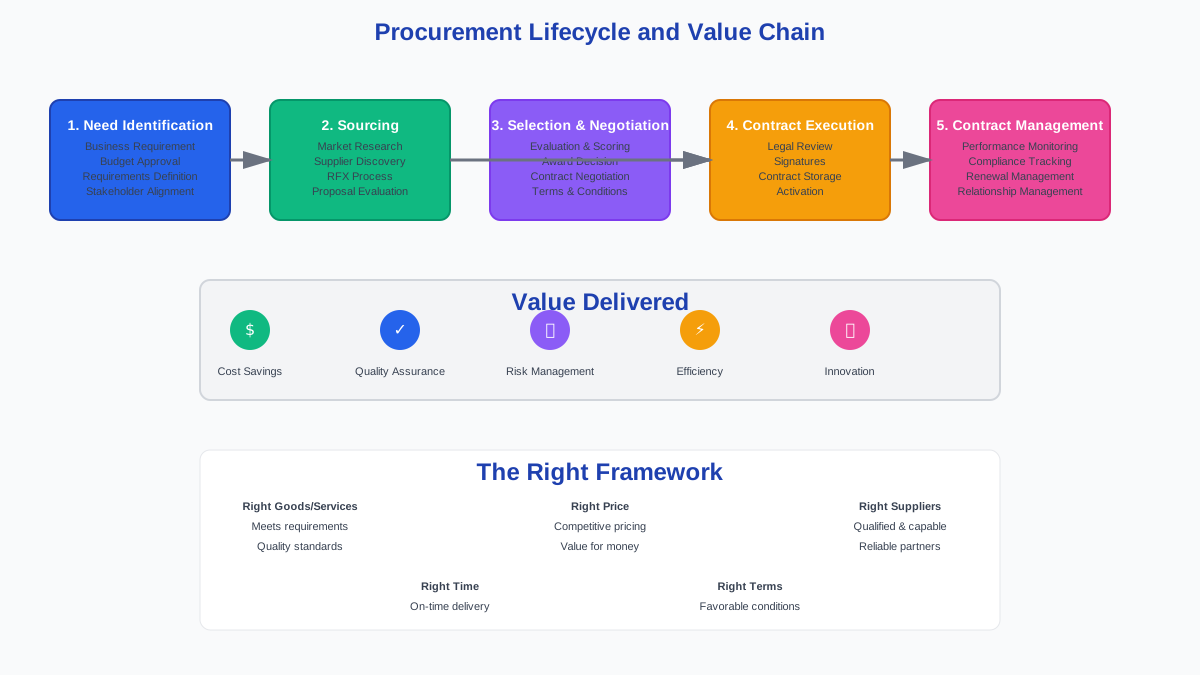
Figure 1: Procurement lifecycle and value chain
Why Procurement Matters
Cost savings
Competitive sourcing and negotiation reduce spending across the organization.
Risk management
Due diligence and solid contracts protect against supplier failures and legal exposure.
Quality assurance
Proper evaluation ensures you get what you need from suppliers who can deliver.
Compliance
Following policies and regulations prevents legal issues and audit failures.
Innovation
Supplier discovery brings new solutions and capabilities into the business.
Efficiency
Standardized processes save time and reduce errors across the buying cycle.
Procurement vs Purchasing
Purchasing
The transactional act of buying. Focuses on order placement, payment, and receipt.
Procurement
The strategic end-to-end process: sourcing, evaluation, negotiation, contract management, and supplier relationships.
Pro tip: Procurement is often the second-largest expense category after payroll. Small improvements in procurement effectiveness can have significant financial impact.
Lesson 02 of 08
Procurement Operating Models
A procurement operating model defines how procurement is organized, how decisions are made, and how work gets done. It covers who does what, how resources are allocated, and what processes are standardized.
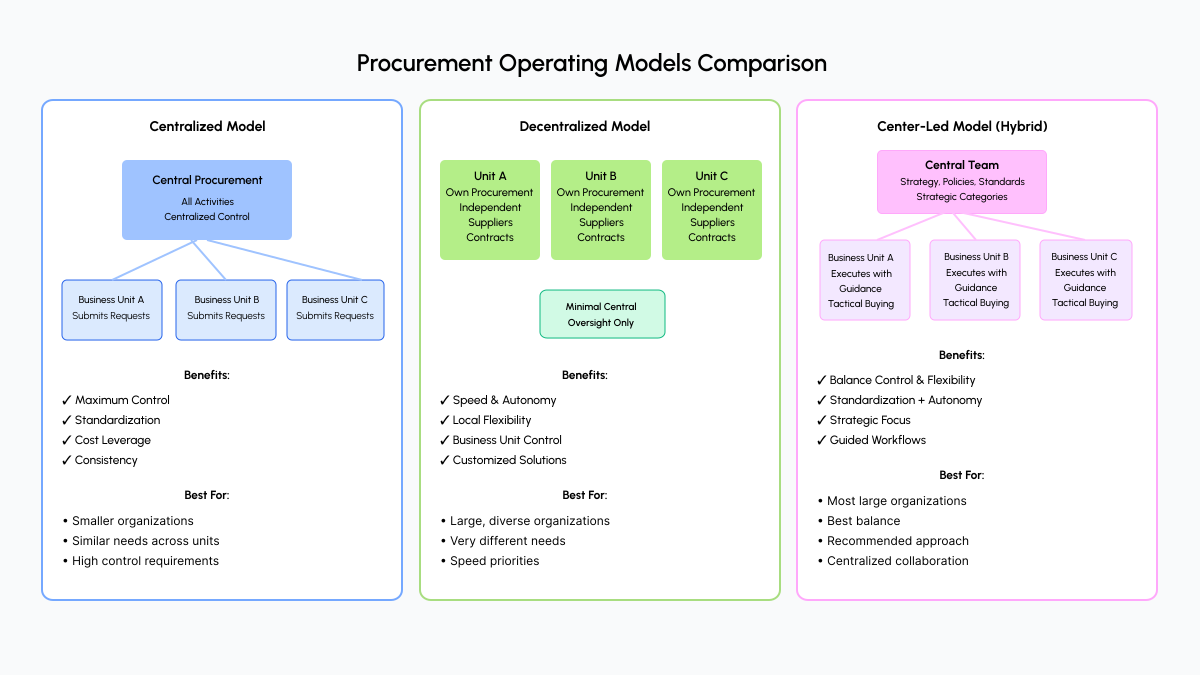
Figure 2: Procurement operating models comparison
Centralized
All procurement is handled by a central team. Business units submit requests; procurement manages everything.
Best for: Organizations wanting maximum control, standardization, and cost leverage.
Decentralized
Business units manage their own procurement with minimal central oversight. Each unit handles suppliers independently.
Best for: Large, diverse organizations with very different needs across business units.
Center-Led (Hybrid)
Central team sets strategy, policies, and standards. Business units execute with guidance on tactical buying.
Best for: Most large organizations. Balances standardization with flexibility.
Key Operating Model Components
Category management: Organizing procurement by spend categories (IT, Marketing, Facilities, etc.)
Process standardization: Common workflows and templates across the organization.
Technology enablement: Tools and platforms that support procurement activities.
Governance structure: Decision rights, approval workflows, and oversight mechanisms.
Skills and capabilities: Training, certifications, and expertise required for the team.
Pro tip: Most successful organizations use center-led models. They provide the right balance of control and flexibility, enabling centralized collaboration while respecting business unit needs.
Lesson 03 of 08
Stakeholders, Approvals, and Governance
Procurement involves many stakeholders, each with different interests and responsibilities. Understanding these relationships is essential for running effective sourcing events.
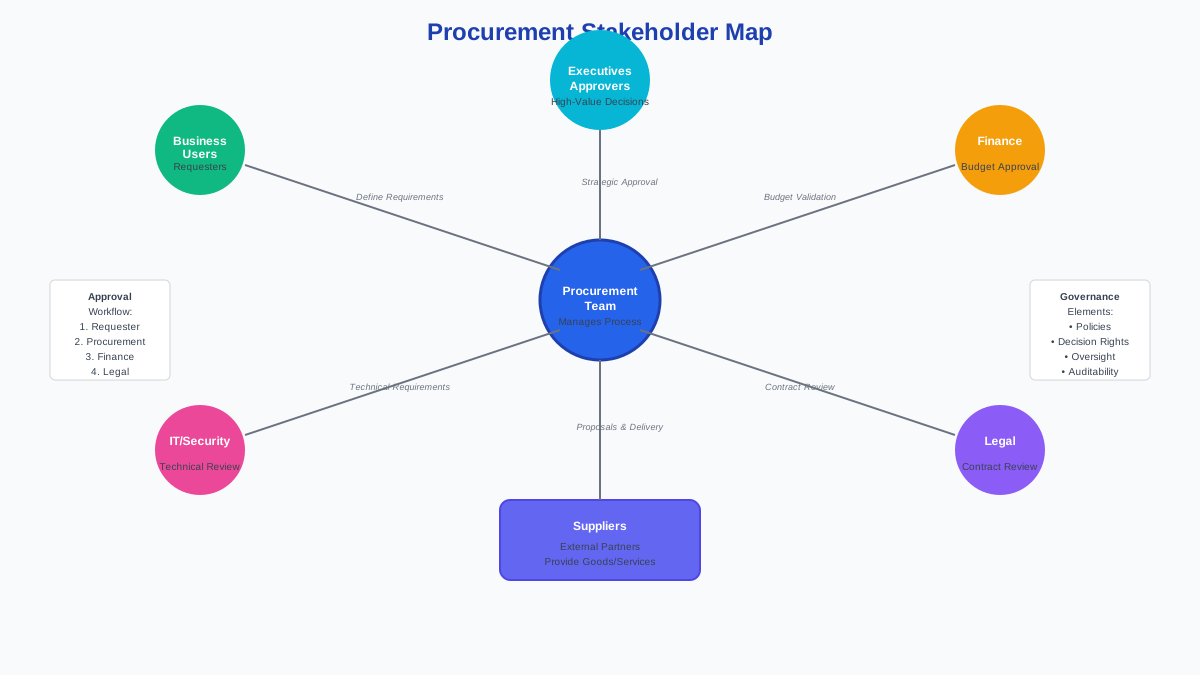
Figure 3: Procurement stakeholder map
Key Stakeholders
Business Users
Requesters
Define requirements and use what is procured. The starting point of any sourcing event.
Procurement Team
Process owner
Manages the sourcing process, supplier relationships, and contract execution.
Finance
Budget control
Approves budgets, validates costs, and ensures financial compliance.
Legal
Contract review
Reviews contracts, negotiates terms, and ensures legal compliance.
IT / Security
Tech & risk
Reviews security, architecture, and technical requirements for IT procurement.
Executives
Final approvers
Approve high-value decisions, strategic suppliers, and exceptions to policy.
Approval Workflows
Typical approval flow
Request
Business user submits a sourcing request
Validate
Procurement reviews requirements and scope
Finance
Budget approved and funding confirmed
Legal
Contract terms reviewed and cleared
Executive
Sign-off required if above spend threshold
Execute
Procurement proceeds with award
What triggers additional approval steps
Spend thresholds: e.g., $10K, $100K, $1M
Contract duration: e.g., multi-year commitments
Category type: e.g., IT, Legal, Marketing
Policy exceptions: e.g., non-preferred suppliers
Risk level: e.g., high-risk suppliers or categories
Governance Framework
Policies & Procedures
Clear rules for how procurement should operate.
Decision Rights
Who can approve what, at which spend thresholds.
Oversight & Reporting
Reviews and metrics that keep leadership informed.
Auditability
Complete records of decisions for compliance.
Continuous Improvement
Regular reviews to identify gaps and refine.
Pro tip: Good governance does not mean bureaucracy. Well-designed governance enables faster decisions by clarifying who needs to approve what, when, and why.
Lesson 04 of 08
Capex and Opex Sourcing
Capital Expenditure and Operating Expenditure require different sourcing approaches, approval processes, and financial treatments. Understanding the distinction is fundamental to procurement practice.
Capital Expenditure
Capex
Spending on assets that provide long-term value and appear on the balance sheet.
Examples
- IT infrastructure (servers, data centers)
- Multi-year software licenses and ERP
- Manufacturing equipment
- Office buildings and facilities
- Major renovations and improvements
Operating Expenditure
Opex
Day-to-day expenses required to run the business, expensed in the current period.
Examples
- SaaS subscriptions (monthly/annual)
- Professional services and consulting
- Office supplies and consumables
- Marketing and advertising
- Training and development
Key Differences
Financial treatment
Capex: Capitalized on balance sheet, depreciated over asset life
Opex: Expensed immediately, impacts current period P&L
Approval process
Capex: Board or senior executive approval, higher thresholds
Opex: Lower thresholds, delegated authority
Contract terms
Capex: Longer-term, asset ownership considerations
Opex: Shorter terms, subscription models, easier to exit
Pro tip: The line between Capex and Opex blurs with modern technology. Cloud infrastructure can be treated as Opex even though it provides long-term value. Work with Finance to understand your organization’s capitalization policies before sourcing.
Nvelop brings AI-native automation to every stage of the procurement lifecycle.
See Nvelop AILesson 05 of 08
Sourcing Types: Transactional to Complex
Not all sourcing is the same. Matching the right approach to the purchase characteristics is one of the most important skills in procurement.
Transactional
Routine, low-value purchases with standardized requirements and minimal complexity. High volume, low risk.
Typical examples
- Office supplies and stationery
- Standard software licenses
- Travel bookings
- Consumables
Approach: Catalog buying, purchase cards, automated workflows, pre-approved suppliers.
Tactical
Medium-value purchases requiring some evaluation and negotiation. Relatively straightforward with moderate complexity.
Typical examples
- Standard software implementations
- Marketing campaigns
- Facilities services
- Training programs
Approach: RFQ or simplified RFP, 3–5 suppliers, price-focused evaluation, template contracts.
Strategic
High-value, high-impact purchases requiring comprehensive evaluation, negotiation, and relationship management.
Typical examples
- Enterprise software (ERP, CRM)
- Cloud infrastructure
- Major consulting
- Outsourcing agreements
Approach: Comprehensive RFP, multi-criteria evaluation, structured negotiation, long-term contract management.
Complex
Highly specialized or innovative purchases requiring deep expertise and often custom solutions.
Typical examples
- Custom software development
- R&D partnerships
- Emerging technology
- Transformation programs
Approach: RFI to explore the market, phased evaluation, pilot programs, flexible contract structures.
Value vs. complexity: choosing the right type
Pro tip: Do not over-engineer simple purchases or under-resource complex ones. Using a full strategic sourcing process for office supplies wastes time. Using a transactional approach for a critical enterprise system creates serious risk.
Lesson 06 of 08
Ethics and Compliance Overview
Ethics and compliance are foundational to procurement. They protect the organization, ensure fair competition, and maintain trust with suppliers and stakeholders.
Common ethical violations
Accepting gifts or favors from suppliers
Favoring suppliers due to personal relationships
Sharing confidential information with suppliers
Conflicts of interest (financial or personal)
Bid rigging or collusion
Ethical Procurement Principles
Transparency
Open and fair processes that can withstand scrutiny.
Fair competition
Equal opportunity for all qualified suppliers.
Integrity
Honest and ethical behavior in all interactions.
Accountability
Taking responsibility for decisions and outcomes.
Confidentiality
Protecting sensitive supplier and organizational information.
Compliance Requirements
Legal compliance: Following applicable laws (contract law, competition law, GDPR, data protection).
Regulatory compliance: Industry-specific regulations (healthcare, financial services, government contracting).
Policy compliance: Following organizational procurement policies, approval thresholds, and procedures.
Contract compliance: Ensuring suppliers meet contract terms, SLAs, and performance requirements.
Pro tip: Modern sourcing platforms help ensure compliance by enforcing approval workflows, maintaining audit trails, and providing built-in compliance checks. This reduces human error and policy violations.
Lesson 07 of 08
Procurement Maturity Models
Procurement maturity models help organizations assess where they are and identify what to improve next. They describe a progression from reactive buying to strategic, AI-enabled procurement.

Figure 4: Procurement maturity model progression
Reactive
No formal processes. Ad hoc buying. Limited spend visibility. Procurement responds to requests as they arrive.
No strategy, minimal policy, reactive decisions
Developing
Some processes and policies exist. Basic sourcing activities. Limited standardization, emerging category focus.
Basic policies, some RFPs, limited standardization
Defined
Standardized processes across the organization. Clear policies and procedures. Category management in place.
Standard processes, category management, basic metrics
Managed
Processes are measured and technology-enabled. Strategic supplier relationships. Data-driven decisions.
Technology-enabled, strategic sourcing, analytics
Optimizing
Continuous improvement. Innovation focus. Predictive analytics. Procurement is a strategic differentiator.
AI-driven, supplier ecosystems, strategic value creation
Pro tip: Most organizations sit at Level 2 or 3. Moving to Level 4 typically requires technology investment and process standardization. Do not try to jump multiple levels at once. Focus on incremental improvements.
Lesson 08 of 08
Common Procurement Challenges
Every procurement organization faces the same recurring problems. Understanding them and their root causes is the first step to building better processes.
Maverick Spending
Business users bypass procurement and buy directly, often at higher prices without proper contracts.
Higher costs, compliance risks, missed leverage, inconsistent supplier management.
Clear policies with consequences, easy-to-use procurement tools, guided buying channels, approval workflows.
Slow Processes
Procurement takes too long, frustrating business users who need solutions quickly.
Stakeholders bypass procurement, missed opportunities, reduced trust in the function.
Standardize and streamline processes, automate manual tasks, pre-approve suppliers, set clear SLAs.
Poor Requirements Definition
Requirements are unclear, incomplete, or change frequently during the sourcing event.
Poor supplier responses, evaluation difficulties, scope creep, delays, dissatisfaction.
Requirements templates and checklists, stakeholder alignment sessions, validation before RFX launch.
Limited Supplier Visibility
Always using the same suppliers, missing better options, limited competition in events.
Higher costs, missed innovation, supplier complacency, reduced competitive tension.
Market research, supplier discovery tools, competitive sourcing events, RFIs to explore new suppliers.
Inconsistent Evaluation
Different evaluators use different criteria, subjective scoring, and unclear rationale.
Unfair outcomes, audit risks, reduced trust in award decisions, poor supplier selection.
Standardized scorecards, clear criteria, evaluator training, collaborative tools, calibration sessions.
Lack of Auditability
No clear records of decisions, approvals, or changes. Email and spreadsheet trails are hard to audit.
Compliance risks, difficulty defending decisions, time-consuming audits, lack of transparency.
Centralized platforms with audit trails, version control, approval workflow tracking, immutable logs.
Pro tip: Many of these challenges are interconnected. Slow processes lead to maverick spending. Poor requirements lead to inconsistent evaluation. Addressing root causes (process standardization and technology enablement) often solves multiple problems at once.
FAQ
Frequently asked questions.
Common questions about procurement structure, operating models, sourcing types, and maturity.
Test Your Knowledge
Procurement Fundamentals Quiz
Ready to test what you have learned? Take the quiz to assess your understanding of procurement basics, operating models, and governance across all eight lessons.
Keep learning
Related Courses
Sourcing Fundamentals
The complete end-to-end sourcing process from intake through award decisions and negotiation.
Source-to-Contract (S2C)
Master every S2C stage: requirements, RFX, supplier evaluation, award, and contract execution.
Source-to-Pay (S2P)
How S2P extends S2C to cover purchase orders, invoicing, three-way match, and supplier payment.
Using Nvelop (Platform Walkthrough)
9-module step-by-step walkthrough of the full sourcing lifecycle inside Nvelop - from project setup through to close.
Course complete.
You have covered procurement fundamentals from structure to strategy. Ready to go deeper into the sourcing process?