
Suppliers are strategic assets.Seven lessons from segmentation to exit.
Seven lessons: segmentation, performance, risk assessment, relationships, development, diversity, and exit strategies.
Course Overview
What you will learn.
Supplier management is the systematic process of segmenting, measuring, and developing suppliers to improve performance, reduce risk, and build partnerships that create mutual value across the full supplier lifecycle.
Supplier Segmentation
Kraljic Matrix
Segmentation criteria
Supplier types
Performance Management
KPIs
Scorecards
Performance reviews
Supplier Risk Assessment
Risk types
Risk scoring
Mitigation strategies
Supplier Relationship Mgmt
SRM framework
Strategic partnerships
Best practices
Supplier Development
Development types
When to invest
Development process
Supplier Diversity
Benefits
Diversity categories
Building a program
Supplier Exit Strategies
When to exit
Exit planning process
Best practices
See how Nvelop scores and tracks supplier performance automatically.
Book a DemoLesson 01 of 07
Supplier Segmentation
Supplier segmentation categorizes suppliers based on strategic importance and relationship complexity. It ensures you allocate the right level of resource to each supplier and apply the right management strategy.
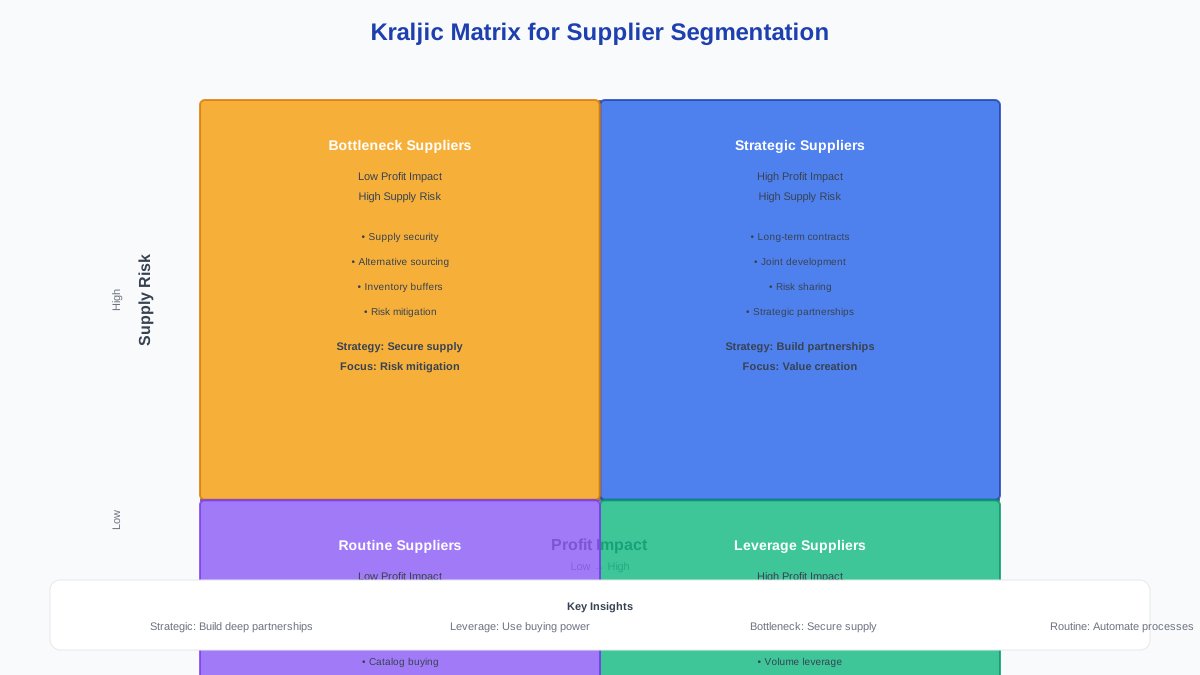
Figure 1: Kraljic Matrix for supplier segmentation
The Four Supplier Types
Strategic
High impact · High risk
Approach: Long-term contracts, joint development, risk sharing, strategic partnerships.
Focus: Value creation, competitive advantage, and collaborative innovation.
Leverage
High impact · Low risk
Approach: Competitive bidding, volume leverage, price negotiations, standard contracts.
Focus: Cost optimization, quality improvement, and performance benchmarking.
Bottleneck
Low impact · High risk
Approach: Long-term contracts, alternative suppliers, inventory buffers, contingency planning.
Focus: Supply security, risk mitigation, and alternative sourcing development.
Routine
Low impact · Low risk
Approach: Process automation, catalog buying, standard terms, minimal management.
Focus: Process efficiency, automation, and cost reduction.
Segmentation Criteria
Spend volume
Total annual spend with the supplier across all categories.
Strategic importance
Impact on business operations, competitive advantage, or customer delivery.
Supply risk
Availability of alternatives, switching costs, and disruption impact.
Complexity
Technical complexity, customization requirements, and integration needs.
Relationship maturity
Length, depth, and trust level of the existing relationship.
Performance history
Track record of reliability, quality, and responsiveness.
Pro tip: Review and update supplier segmentation annually. Suppliers move between categories as spend shifts, market conditions change, or supplier capabilities evolve. A bottleneck supplier who builds capacity may move to routine, unlocking efficiency improvements.
Lesson 02 of 07
Supplier Performance Management
Supplier performance management measures, monitors, and improves supplier performance against defined criteria. It ensures suppliers meet expectations and creates a structured basis for improvement.
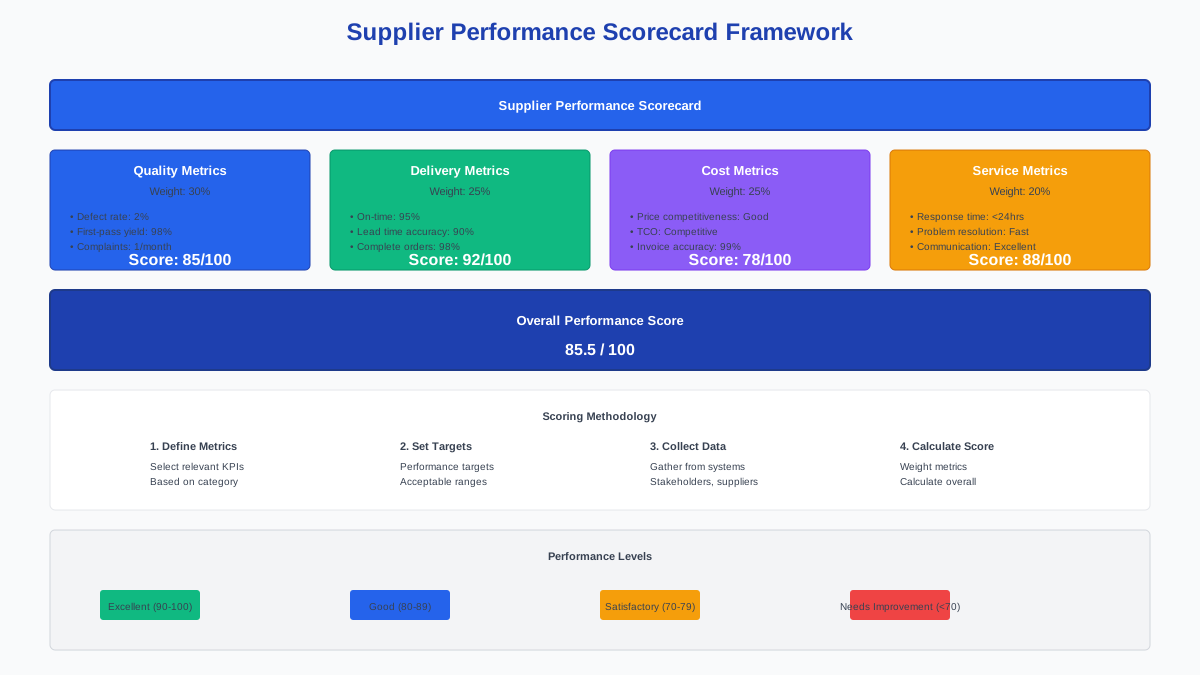
Figure 2: Supplier performance scorecard framework
Key Performance Indicators
Quality
- Defect rate and first-pass yield
- Customer complaints from supplier
- Returns and rejections
- Quality certifications
Delivery
- On-time delivery percentage
- Lead time accuracy
- Complete order fulfillment
- Shipping accuracy
Cost
- Price competitiveness
- Total cost of ownership
- Cost reduction achievements
- Invoice accuracy
Service
- Responsiveness to inquiries
- Problem resolution time
- Communication effectiveness
- Innovation contributions
Performance Review Process
From data to improvement
Prepare
Gather performance data, review scorecards, identify issues, prepare agenda
Conduct review
Meet supplier, present data, discuss issues, gather their feedback
Action plan
Identify improvement areas, set goals, assign owners, define timelines
Follow up
Monitor progress, provide support, adjust plans, recognize improvements
Pro tip: Share scorecard results with suppliers before review meetings, not during them. Suppliers who see the data in advance arrive better prepared, discussions are more productive, and action plans tend to be stronger.
Lesson 03 of 07
Supplier Risk Assessment
Supplier risk assessment identifies and evaluates risks across your supplier base. Proactive risk management protects supply chain continuity and prevents disruptions before they occur.
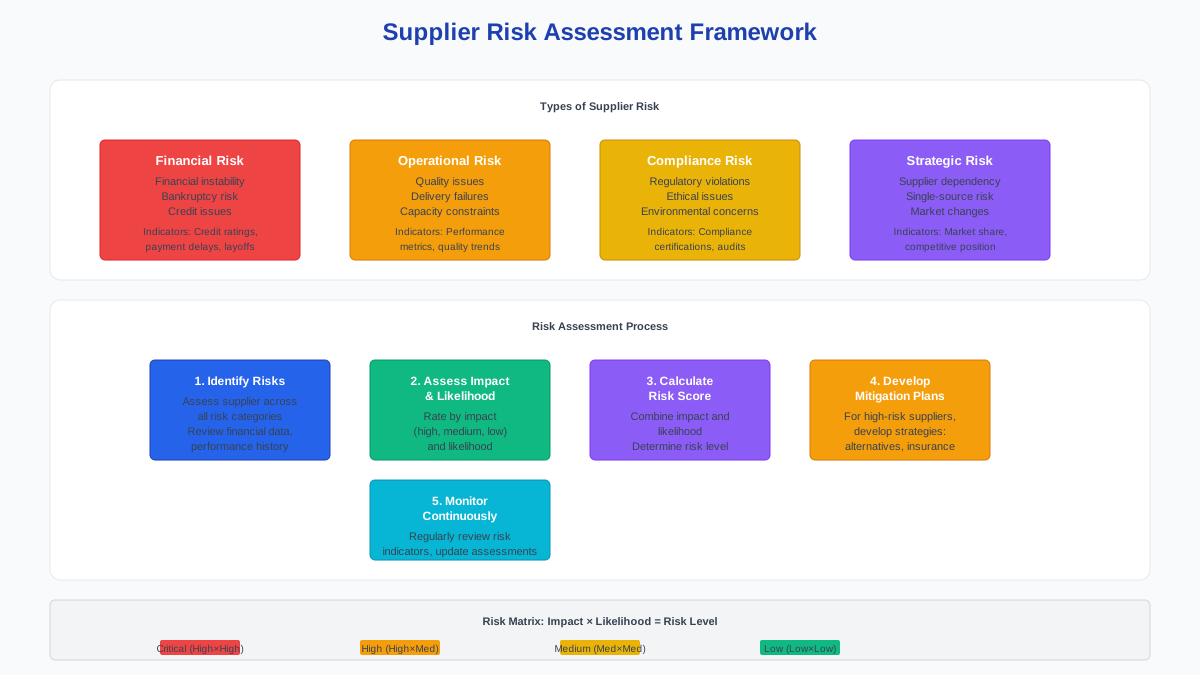
Figure 3: Supplier risk assessment framework
Types of Supplier Risk
Financial risk
Supplier financial instability, bankruptcy risk, or credit issues.
Indicators: Credit ratings, financial statements, payment delays, workforce changes.
Operational risk
Quality issues, delivery failures, capacity constraints, or technology failures.
Indicators: Performance metrics, capacity utilization, quality defect trends.
Compliance risk
Regulatory violations, ethical issues, environmental or labor practice concerns.
Indicators: Compliance certifications, audit results, news monitoring.
Strategic risk
Single-source dependency, supplier market changes, or competitive threats.
Indicators: Market share, customer concentration, strategic direction signals.
Geopolitical risk
Political instability, trade restrictions, currency fluctuations, natural disasters.
Indicators: Country risk ratings, trade policy changes, weather and climate data.
Risk Assessment and Mitigation
Identify risks: Assess each supplier across all risk categories using financial data, performance history, and compliance status.
Rate impact and likelihood: Score each risk by potential impact (high, medium, low) and likelihood (high, medium, low).
Calculate risk score: Combine impact and likelihood. High impact and high likelihood signals a critical risk requiring immediate action.
Develop mitigation plans: For high-risk suppliers: qualify alternatives, add contractual protections, build inventory buffers, or set up monitoring alerts.
Monitor continuously: Review risk indicators regularly, update assessments, and adjust mitigation plans as conditions change.
Common mistake: Treating risk assessment as a one-time onboarding exercise. Supplier risk changes continuously. Regular monitoring and reassessment are what prevent disruptions, not the initial check.
Lesson 04 of 07
Supplier Relationship Management
SRM is the strategic approach to managing supplier interactions. It applies different relationship models based on supplier segmentation, with the goal of building partnerships that create mutual value.

Figure 4: SRM framework and relationship tiers
The Three Relationship Tiers
Strategic Partners
For Strategic suppliers
Approach: Joint planning, collaborative innovation, risk sharing, long-term contracts.
Focus: Innovation, competitive advantage, strategic alignment.
Preferred Suppliers
For Leverage suppliers
Approach: Regular communication, performance reviews, volume commitments, good-faith relations.
Focus: Cost optimization, quality, and delivery reliability.
Transactional Suppliers
For Routine suppliers
Approach: Efficient transactions, standard processes, minimal relationship management.
Focus: Process efficiency, automation, and cost.
Building Strategic Partnerships
Joint planning
Share business plans, forecasts, and strategic objectives. Align goals and coordinate roadmaps.
Innovation collaboration
Work together on new products, processes, or solutions. Share ideas, data, and resources.
Risk sharing
Share risks and rewards through long-term commitments, investment guarantees, and performance incentives.
Governance structure
Establish steering committees, regular reviews, escalation paths, and joint decision-making frameworks.
Pro tip: Reserve deep SRM investment for your top 5 to 10 strategic suppliers. Attempting to manage all suppliers at a strategic level dilutes effort and produces weaker results everywhere. Match the relationship depth to the supplier tier.
Nvelop centralizes supplier scorecards and relationship history in one place.
See Vendor EvaluationLesson 05 of 07
Supplier Development and Improvement Programs
Supplier development helps suppliers improve capabilities, performance, and competitiveness. It creates mutual value, strengthens supply chains, and deepens strategic relationships.
When to Invest in Supplier Development
The supplier has potential but needs improvement in specific areas
Limited alternatives exist and switching costs are high
The supplier is willing and able to invest in improvement
The development ROI is justified by long-term strategic value
The supplier is critical to your competitive position
Performance issues are process-related, not due to capability ceiling
Types of Supplier Development
Quality improvement
Training, process improvement, quality systems, certification support.
Example: Six Sigma training, ISO certification, quality audit programs.
Capacity building
Equipment, technology, facilities, and workforce development.
Example: Technology transfer, equipment loans, capacity planning support.
Cost reduction
Lean manufacturing, process optimization, and waste reduction.
Example: Lean training, value engineering, cost reduction workshops.
Innovation support
R&D collaboration, technology sharing, and joint development.
Example: Joint R&D projects, innovation challenges, technology partnerships.
Development Process
Assess needs: Identify improvement areas through performance reviews, capability assessments, and supplier input.
Develop plan: Create a development plan with goals, activities, resources, timeline, and success metrics.
Execute: Provide support: training, resources, expertise, and access to tools or technology.
Monitor progress: Track improvements, measure results against targets, and adjust plans as needed.
Sustain: Ensure improvements are embedded in the supplier's processes. Provide ongoing support and recognize achievements.
Pro tip: The most effective supplier development programs are co-designed with the supplier, not imposed on them. When suppliers have ownership of the improvement plan, commitment and results are significantly stronger.
Lesson 06 of 07
Supplier Diversity and Inclusion
Supplier diversity programs promote procurement from minority-owned, women-owned, veteran-owned, and small businesses. These programs create both social and business value.
Business Benefits
Innovation
Diverse suppliers bring different perspectives and approaches that drive new ideas.
Competition
More suppliers increases competition, improving pricing and service quality.
Risk reduction
A broader supplier base reduces dependency on any single supplier or type.
Social impact
Supports economic development and creates opportunities in diverse communities.
Compliance
Meets regulatory requirements and corporate social responsibility commitments.
Diversity Categories
Minority-Owned (MBE)
Businesses owned by racial or ethnic minorities (typically 51% or more ownership).
Women-Owned (WBE)
Businesses owned and controlled by women (typically 51% or more ownership).
Veteran-Owned (VOB)
Businesses owned and operated by military veterans.
Small Business (SBE)
Businesses meeting defined size standards based on revenue or employee count.
LGBTQ+-Owned
Businesses owned and controlled by LGBTQ+ individuals.
Disability-Owned
Businesses owned by individuals with disabilities.
Building a Diversity Program
Set goals: Define diversity spend targets, track against them, and report progress to leadership.
Identify suppliers: Use certification databases, diversity organizations, and supplier networks to find qualified suppliers.
Remove barriers: Simplify qualification processes, offer mentorship, and provide support for smaller businesses.
Track and measure: Monitor diverse spend by category and supplier, and include it in supplier management reports.
Provide support: Offer training, networking opportunities, mentorship, and capacity building to diverse suppliers.
Recognize success: Celebrate achievements, share supplier success stories, and build momentum across the program.
Pro tip: Supplier diversity works best when embedded into the sourcing process, not treated as a separate initiative. When diverse suppliers are included in every competitive event by default, outcomes improve naturally without extra overhead.
Lesson 07 of 07
Supplier Exit Strategies
Supplier relationships sometimes need to end. Managing exits professionally protects operations, preserves reputation, and minimizes disruption regardless of the reason for the change.
Common Reasons to Exit a Supplier
Persistent performance issues
Consistent failures despite improvement programs and clear expectations.
Strategic change
Category no longer needed or business direction has shifted.
Cost competitiveness
Supplier is no longer competitive and better alternatives are available.
Unacceptable risk
Supplier risk level has grown beyond tolerance, including compliance issues.
Supplier base consolidation
Reducing supplier count to increase focus, leverage, and efficiency.
Relationship breakdown
Irreparable loss of trust or fundamental misalignment on values.
Exit Planning Process
Decision to completed exit
Assess impact
Evaluate current commitments, transition requirements, and alternative suppliers
Transition plan
Identify replacement, plan knowledge transfer, inventory, and system migration
Review contracts
Check termination clauses, notice periods, obligations, penalties, and IP rights
Communicate
Notify supplier professionally, explain reasons, and discuss transition timeline
Execute transition
Manage knowledge transfer, system migration, inventory, and final deliveries
Complete exit
Fulfill obligations, close contracts, settle accounts, document lessons learned
Common mistake: Abrupt supplier exits without adequate notice or transition planning. This disrupts operations, creates legal exposure, and damages your organization's reputation in the supply market. Always plan exits with the same rigor as onboarding.
Pro tip: Treat exited suppliers with the same professionalism you expect from them. Markets are small, reputations travel, and today's exited supplier may be a future candidate, a reference for another supplier, or part of your industry network.
FAQ
Frequently asked questions.
Common questions about supplier management, SRM, performance KPIs, and supplier risk.
Test Your Knowledge
Supplier Management Quiz
Ready to test what you have learned? Take the quiz to assess your understanding of supplier segmentation, performance management, risk assessment, and SRM across all seven lessons.
Keep learning
Related Courses
Contract Management & Negotiation
Move from supplier selection into contract drafting, negotiation tactics, and clause management.
Source to Contract (S2C)
See where supplier management fits into the full 7-stage source-to-contract process.
Category Management & Strategic Sourcing
Apply supplier segmentation and relationship strategy at the category level.
Course complete.
You have covered the full supplier management lifecycle. Ready to go deeper on contract management or the source-to-contract process?