
AI procurement without lock-in.Switch models. Keep your data.
Why your procurement platform should work with any AI provider, and how to avoid vendor lock-in as AI reshapes sourcing.
Course Overview
What you will learn.
AI vendor independence is the ability to switch, combine, or replace AI providers without being locked into a single vendor's proprietary models, data formats, or infrastructure. In procurement, this means your sourcing platform should work with any AI backbone - OpenAI, Anthropic, Google, or open-source models - while keeping your data portable and your workflows intact.
Why AI Vendor Independence Matters
AI technology is evolving faster than any enterprise technology in history. The leading model today may not be the best choice in six months. Organizations that lock into a single AI vendor face rising costs, inability to adopt superior models, and reduced negotiating leverage.
Innovation Access
Adopt the best AI models as they emerge, not just the ones your vendor supports. The AI landscape shifts fast - lock-in means you fall behind.
New frontier models
release every 3-6 months
Cost Optimization
Use the most cost-effective model for each task. Right-sizing models to tasks can cut AI inference costs significantly vs. using one premium model for everything.
60-80%
AI cost reduction potential
Risk Mitigation
Reduce dependency on any single vendor. Maintain business continuity if a provider changes terms, raises prices, or discontinues a model.
Zero
single-vendor dependencies
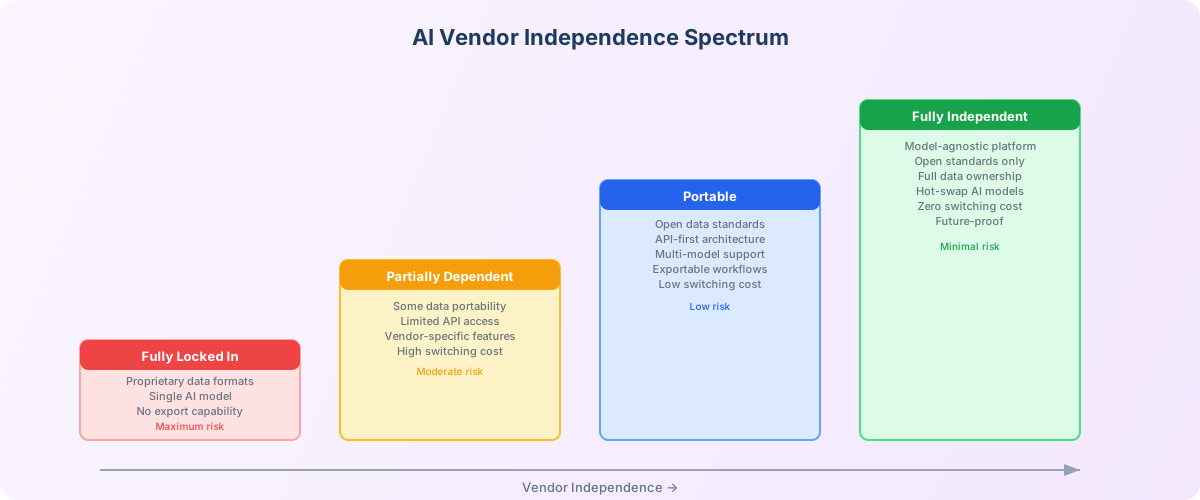
Figure 1: The vendor independence spectrum - from full lock-in to full portability.
Signs of AI Vendor Lock-In in Procurement
Vendor lock-in often happens gradually. Here are the warning signs that your procurement platform is tying you to a single AI provider.
Single-provider AI models
Your platform only works with one AI provider's models. If that provider raises prices or degrades quality, you have no alternative within the platform.
Proprietary data formats
Your procurement data is stored in formats that can't be exported or used with other systems. Your RFPs, evaluations, and historical data are trapped in the vendor's schema.
Vendor-specific APIs with no abstraction
Your integrations and workflows are built directly against a vendor's proprietary API. Switching providers would require rebuilding core functionality from scratch.
Migration barriers in contract terms
Your contract includes penalties for early termination, your data requires expensive transformation to export, or the platform lacks standard export capabilities entirely.
Open Standards, APIs, and Data Portability
AI vendor independence is built on three technical foundations: open standards for data interchange, well-documented APIs for integration, and full data portability so you can move your procurement data freely.
Open Standards
Data stored in standard formats (JSON, CSV, XML). APIs follow REST/GraphQL conventions. Integration uses standard protocols (OAuth, SAML, SCIM). No proprietary encoding.
API-First Architecture
All platform functionality accessible via documented APIs. Business logic separated from AI models through abstraction layers. Webhooks for event-driven integration.
Data Portability
Full data export at any time - your RFPs, evaluations, audit trails, and analytics data. Exportable in standard formats without vendor approval or professional services fees.
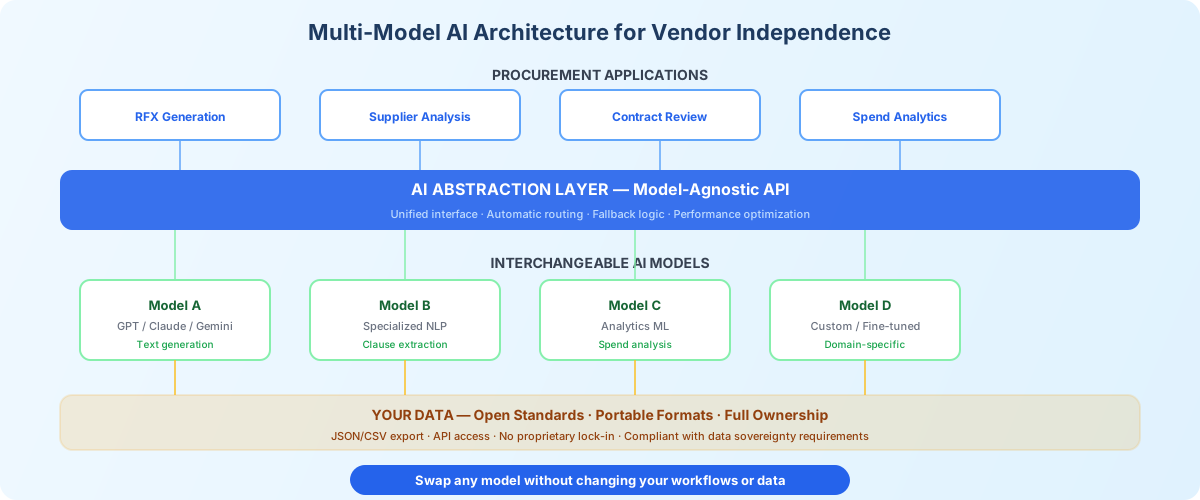
Figure 2: A model-agnostic architecture enables swapping AI models without changing workflows or data.
How to Evaluate AI Procurement Platforms for Independence
When evaluating AI procurement platforms, ask these questions to assess vendor independence. Push for live demos that answer each question directly, not just slides.
Which AI models does the platform support?
Ask: Show me model switching in a live demo.
Look for platforms that support multiple AI providers (OpenAI, Anthropic, Google, open-source). Single-model platforms create immediate lock-in from day one.
Can I export all my data at any time?
Ask: Run a full data export in your demo environment now.
Demand full data export capabilities in standard formats. Your RFPs, evaluations, and audit trails should be portable without vendor permission or extra fees.
Is the AI layer abstracted from the business logic?
Ask: What happens to our workflows if we switch AI providers?
The platform's core functionality should work independently of any specific AI provider. Swapping models should not require rebuilding workflows or re-training staff.
What are the contractual terms for migration?
Ask: Show me the data export rights section of your contract.
Review early termination clauses, data export rights, and transition assistance. Avoid contracts that penalize switching or limit data access on termination.
Building a Multi-Model AI Strategy
The most effective approach to AI vendor independence isn't choosing one provider - it's using different models for different tasks based on each model's strengths.
Task-Optimized Model Selection
- Document generation: Large language models optimized for writing
- Numerical analysis: Models strong in quantitative reasoning
- Compliance checking: Models trained on regulatory data
- Classification tasks: Smaller, faster models for cost efficiency
Benefits of Multi-Model Approach
- Best performance for each task type
- Optimized costs - right-size model to task
- Zero single-vendor dependency
- Adopt new models instantly as they release
The abstraction layer is the key enabler
A multi-model strategy only works if your procurement platform has an abstraction layer that separates business logic from AI models. This means you can swap, combine, or upgrade AI providers without touching your workflows, integrations, or historical data.
Checklist: Ensuring Vendor Independence in Your AI Stack
Use this checklist when evaluating or auditing your current AI procurement platform for vendor independence risks.
Multi-provider AI support
Platform supports 2+ AI providers with the ability to switch or combine models without code changes or professional services engagement.
Standard data formats
All data exportable in JSON, CSV, or other standard formats. No proprietary encoding or encryption that limits portability to other systems.
Documented, versioned APIs
Full API documentation with versioning guarantees. Breaking changes communicated with migration paths. Standard auth protocols (OAuth, SAML).
No data hostage clauses
Contract guarantees full data export rights, no early termination penalties for data access, and reasonable transition assistance.
AI abstraction layer
Business logic and workflows operate independently of AI models. Model changes don't affect core procurement functionality or existing integrations.
Red Flags to Watch For
- • Vendor avoids answering questions about AI model flexibility during the sales process
- • Data export requires "professional services" engagement or additional fees
- • Contract includes multi-year lock-in with escalating pricing tiers
- • Platform stops working if a specific AI provider is unavailable
Frequently Asked Questions About AI Vendor Independence
AI-Powered Procurement Without Lock-In
Nvelop is built on an AI-agnostic architecture that supports multiple AI providers.
Continue Learning
AI Procurement Automation
How AI platforms differ from traditional procurement tools
Enterprise Systems Integration
Connect procurement AI with ERP and finance systems
MCP in Procurement
How Model Context Protocol enables AI-to-system integration
Go Deeper
Claude for Procurement
How to deploy Anthropic's Claude for contract review, spend analytics, and RFx drafting